
Why Does My House Smell Musty? A Complete Guide to Fresh Air
Walking into your own home should feel like a relief, a sanctuary from the outside world. But nothing ruins that feeling faster than opening the door and being hit with a heavy, stale, and unmistakably musty odor. It’s embarrassing when guests come over, and frankly, it’s frustrating when you clean regularly but the smell persists.
You aren’t alone in asking, “Why does my house smell musty?” It is one of the most common complaints homeowners have regarding home air quality. That distinctive “old library” or “wet cardboard” scent is almost always a sign of underlying moisture issues, which can lead to mold and mildew growth if left unchecked.
This guide will dive deep into the root causes of these odors, help you play detective to find the source, and provide actionable steps to eliminate musty odors for good.
Understanding the Musty Smell: What Is It?

Before we can fix the problem, we need to understand what we are fighting. That characteristic musty smell in a house is not just “stale air.” It is actually a biological signal. The scent comes from Microbial Volatile Organic Compounds (mVOCs). These are gases released by mold and mildew as they grow and reproduce.
When you smell that musty odor, you are inhaling the chemical byproducts of active fungal growth. This is why masking the smell with air fresheners never works long-term. You might cover the scent for an hour, but as long as the mold or bacteria are eating and growing, they will keep pumping out those gases.
Common Causes of Musty Smell in House
Answering “why does my house smell musty” requires looking at several potential culprits. While mold is the source of the smell, the source of the mold is always moisture.
1. High Humidity and Poor Ventilation
The most pervasive cause is simply high humidity. If you live in a humid climate or your home lacks proper ventilation, moisture accumulates in the air. Porous materials like drywall, carpets, and upholstery absorb this moisture like a sponge. Once these materials are damp, they become the perfect breeding ground for microscopic spores.
2. Hidden Water Leaks
Sometimes the dampness in a house is obvious, but often it is hidden. A slow drip from a pipe inside a wall, a hairline crack in your foundation, or a small leak in your roof can introduce just enough water to feed mold colonies without creating a visible puddle. These hidden leaks are particularly dangerous because they allow mold to grow undisturbed for months or even years.
3. HVAC Issues
Your Heating, Ventilation, and Air Conditioning (HVAC) system is the lungs of your home. If your ductwork has condensation buildup or if the drain pan in your AC unit is clogged, mold can grow inside the system. Every time the fan turns on, it blows those musty spores and mVOCs into every room of your house.
4. Dirty Carpets and Upholstery
Carpets are notorious for trapping dust, skin cells, and moisture. This combination is an all-you-can-eat buffet for mold and bacteria. Even if you vacuum regularly, spills that weren’t dried properly or high humidity can cause the padding underneath the carpet to smell.
5. Wet Laundry and Mudrooms
Leaving wet clothes in the washing machine overnight or piling damp towels in a hamper can sour the air quickly. Similarly, a mudroom filled with wet shoes and raincoats can contribute to a localized musty smell that eventually drifts elsewhere.
How to Identify the Source of the Smell
You know you have a problem, but you can’t see it. How do you find it? You need to systematically check your home to identify the source.
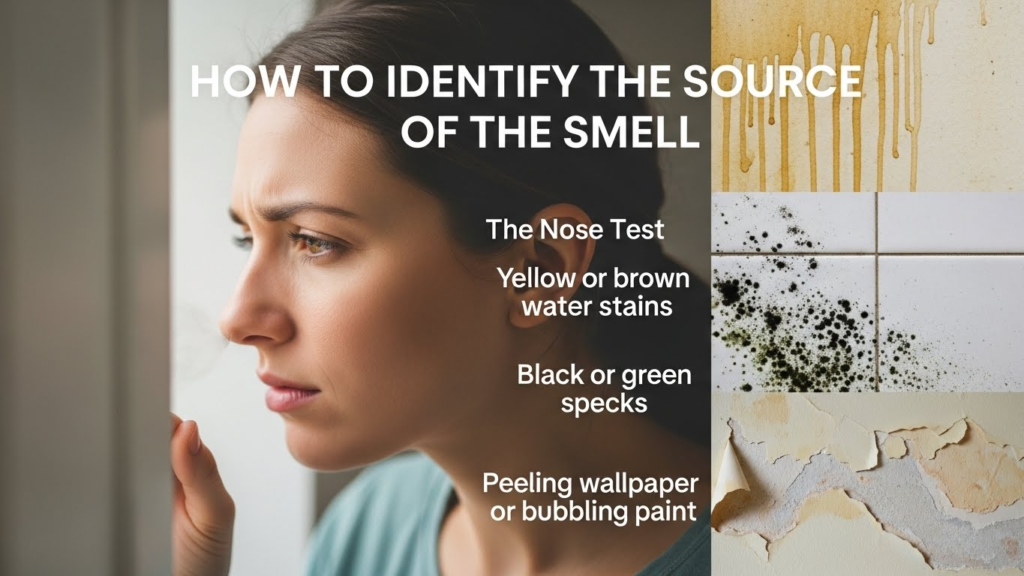
The Nose Test
Start by closing all windows and doors. Turn off your HVAC system to stop air circulation. Walk through your house, room by room. Where is the smell strongest? Is it worse in the basement? The bathroom? Near a specific wall?
Check for Visual Signs
Look for discoloration on walls, ceilings, and floors. Mold doesn’t always look like fuzzy green spots; it can appear as:
- Yellow or brown water stains
- Black or green specks
- Peeling wallpaper or bubbling paint
- White, powdery substances on concrete or brick (efflorescence)
Use a Moisture Meter
This is a professional trick that is affordable for homeowners. A moisture meter can tell you if a wall or floor is wet, even if it looks dry. If you find a wall with a high moisture reading, you have likely found your hidden leak and the source of your musty woes.
Inspect the “Dark Zones”
Mold loves darkness. Inspect the areas you rarely look at:
- Under sinks in the kitchen and bathroom
- Behind toilets
- Inside crawl spaces
- In the attic, especially near roof valleys and vents
- Behind heavy furniture that rests against exterior walls
Room-by-Room Guide to Eliminating Musty Odors
Once you have a general idea of where the smell is coming from, you can start the cleanup process. Here is how to target specific areas to eliminate musty odors effectively.
The Basement
Basements are ground zero for musty smells. They are naturally cooler and surrounded by damp soil.
- Solution: Run a high-capacity dehumidifier continuously to keep relative humidity below 50%. Seal any cracks in the foundation walls with hydraulic cement. If you have carpet in a damp basement, consider replacing it with vinyl plank or tile.
The Bathroom
Bathrooms see massive spikes in humidity every day.
- Solution: Ensure your exhaust fan is working and actually venting to the outside (not just into the attic). Run the fan for at least 30 minutes after every shower. Check the grout and caulking around the tub and sink; if it’s black or peeling, replace it.
The Kitchen
Kitchens have plenty of water sources and organic food waste.
- Solution: Check under the sink for leaks. Clean the drip pan under your refrigerator. Run the garbage disposal with ice cubes and lemon peels to clean the blades. Ensure your stove hood vents to the outside to remove cooking moisture.
The Bedroom and Living Areas
Musty smells here often come from textiles.
- Solution: Sprinkle baking soda on carpets and upholstered furniture, let it sit for a few hours (or overnight), and vacuum it up. Wash curtains and drapes. If you have old furniture that smells musty, move it outside on a sunny, breezy day. UV rays are excellent natural disinfectants.
The Attic and Crawl Space
These neglected areas can ruin your home’s air quality.
- Solution: Ensure your attic has proper ventilation (soffit and ridge vents) to prevent heat and moisture buildup. In crawl spaces, install a vapor barrier—a thick plastic sheet over the dirt floor—to stop ground moisture from rising into the house.
Actionable Solutions to Remove the Smell
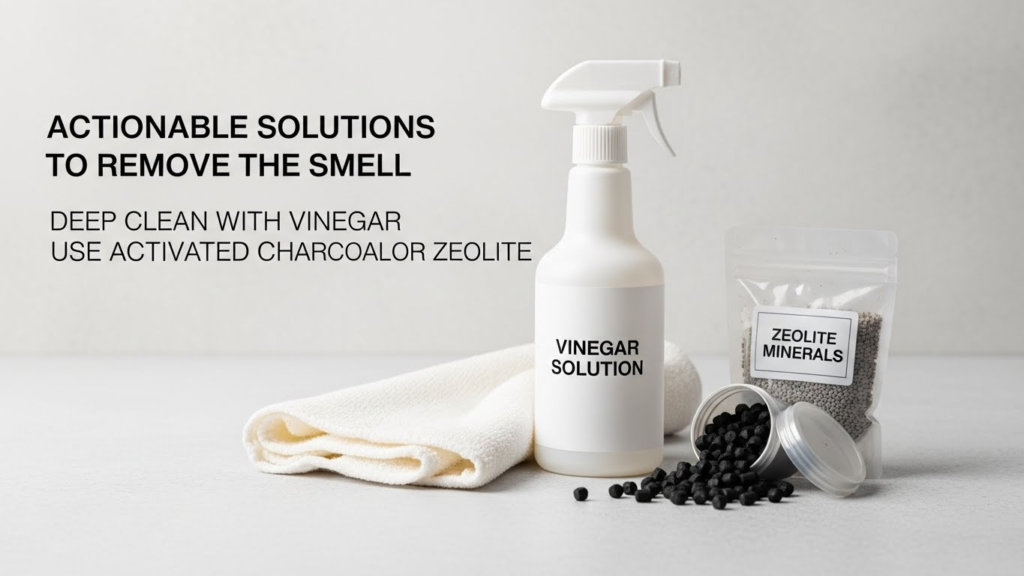
If you’ve cleaned visible mold and fixed leaks but the smell lingers, you need to treat the air and the materials in your home.
1. Deep Clean with Vinegar
White distilled vinegar is a powerhouse for killing mold and neutralizing odors. It is acidic enough to break down the structure of mold. Mix equal parts water and vinegar in a spray bottle. Mist affected areas, let it sit, and wipe clean. For laundry, add a cup of vinegar to the rinse cycle to strip away mildew smells from towels and clothes.
2. Use Activated Charcoal or Zeolite
To absorb lingering airborne odors, place bowls of activated charcoal or zeolite rocks in musty rooms. These materials have incredible surface area and trap odor molecules effectively. Unlike scented candles, they remove the smell rather than covering it up.
3. Improve Air Circulation
Stagnant air is the enemy. Open windows on dry, breezy days to flush out the stale air. Use ceiling fans and portable fans to keep air moving, which discourages mold spores from settling and growing.
4. Invest in an Air Purifier
A high-quality air purifier with a HEPA filter and an activated carbon filter can be a game-changer for home air quality. The HEPA filter captures mold spores, while the carbon filter absorbs the volatile organic compounds (the smell). This is a great maintenance step to prevent musty odors from returning.
5. Professional Ozone Treatment
For extreme cases where the smell has permeated the structure of the house, you might consider professional ozone generation. Ozone (O3) is a gas that neutralizes odors at a molecular level. Warning: Ozone is harmful to humans, pets, and plants. This treatment must be done by professionals in an unoccupied house.
When to Call a Professional
Sometimes, the answer to “why does my house smell musty” is a problem too big for DIY solutions. You should call a professional mold remediation specialist if:
- The area covered by mold is larger than 10 square feet (roughly 3 feet by 3 feet).
- You smell mold but cannot find the source after a thorough search.
- You find mold in your HVAC system.
- The water damage was caused by sewage or contaminated water.
- You or your family members are experiencing health issues like allergies, asthma attacks, or unexplained headaches.
Prevention: How to Stop the Smell from Returning
Eliminating the smell is only half the battle. You need to prevent musty odors from coming back. Prevention requires a lifestyle shift toward moisture management.
Maintain Proper Humidity Levels
Keep your indoor humidity between 30% and 50%. Buy a hygrometer (they are cheap and available online) to monitor levels. Use dehumidifiers in summer and ensure your AC is sized correctly for your home (an oversized unit cools too fast without removing enough humidity).
Fix Leaks Immediately
Do not ignore the dripping faucet or the running toilet. Make it a habit to check under sinks and around appliances like dishwashers and washing machines every few months.
Declutter
Clutter restricts airflow. Closets packed tight with clothes and boxes shoved against walls prevent air from circulating, creating pockets of stagnant air where mold can thrive. Keep furniture slightly away from walls to allow the house to “breathe.”
Regularly Clean Gutters
Clogged gutters cause water to overflow and pool around your foundation. This water can seep into your basement or crawl space, causing dampness in the house. Ensure your downspouts direct water at least 6 feet away from your home.
Conclusion
Living with a musty smell isn’t just unpleasant; it’s a sign that your home’s ecosystem is out of balance. By asking “why does my house smell musty,” you’ve taken the first step toward a healthier living environment.
Remember, the battle against musty odors is really a battle against moisture. Whether it’s a hidden leak, high humidity, or poor ventilation, finding and fixing the water source is the only permanent cure. Start with a thorough inspection, tackle the moisture issues, and clean the affected areas deeply.
With the right tools and a bit of detective work, you can eliminate musty odors and restore the fresh, clean air your home deserves.


