What Does Off Market Mean on Zillow? The Complete Guide for Buyers and Sellers
If you have spent any time browsing real estate listings online, you have likely encountered a home that seemed perfect—great location, beautiful curb appeal, and just the right size—only to see the status listed as “Off Market.” For many hopeful homebuyers, this can be confusing and disheartening. Does it mean the house is sold? Is it coming back soon? Or is it a secret listing waiting for the right offer?
Understanding property status terminology is crucial in the fast-paced world of real estate. Zillow, as one of the largest real estate marketplaces, uses specific terms to categorize homes, and “off market” is one of the most commonly misunderstood labels.
This comprehensive guide will break down exactly what “off market” means on Zillow, why homes carry this status, and how savvy buyers and sellers can navigate the hidden opportunities within these listings.
Defining “Off Market” on Zillow
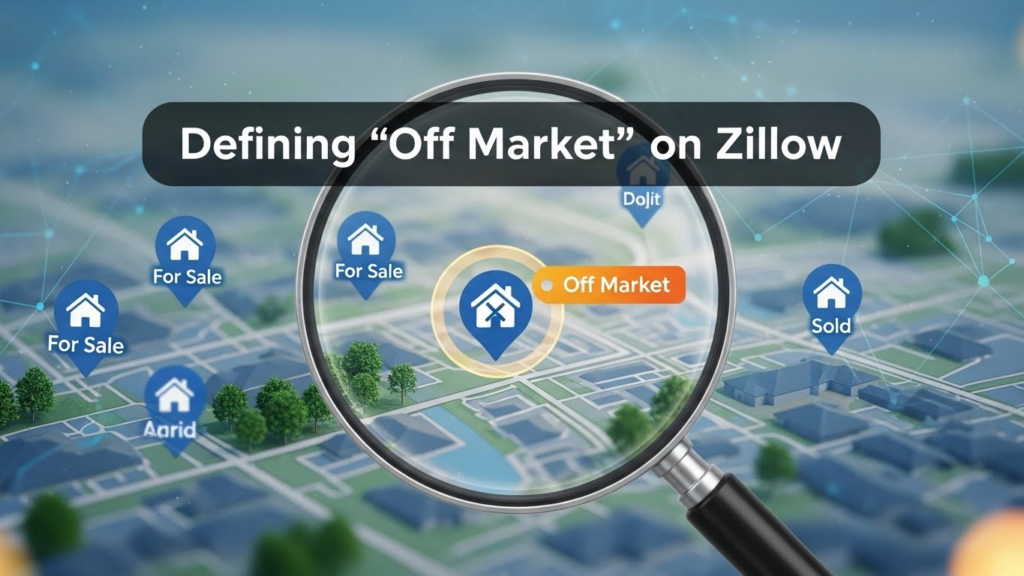
At its simplest level, off market on Zillow means a property is not currently listed for sale on the Multiple Listing Service (MLS). It indicates that the homeowner is not actively soliciting offers through public channels. However, the term is nuanced and can represent several different scenarios depending on the context.
Unlike “For Sale” or “Pending,” which signal active transaction phases, “off market” is essentially a default state for the vast majority of homes in the United States. If a house isn’t being sold, it is off the market. However, when you are looking at a specific address on Zillow and see this status, it usually triggers curiosity because you might be interested in purchasing that specific home.
The Technical Definition
From a data perspective, Zillow pulls information from various MLS databases and public records. When a listing agent cancels a listing, or when a listing expires without a sale, the status reverts to off market. Similarly, once a sold home has closed and the transaction is final, it eventually settles back into off-market status after being marked as “Sold” for a period.
Pocket Listings vs. Off Market
It is important to distinguish between a general off-market home and a “pocket listing.” A pocket listing is technically off the market (not on the MLS) but is actually for sale. In these cases, a real estate agent is marketing the property privately to a select group of buyers. While Zillow may label these as off market because they lack an MLS number, they are very much available for purchase if you have the right connections.
Why Properties Are Marked as Off Market
Understanding why a home is labeled off market can help you determine if there is any potential for a sale. There are several common reasons this status appears.
1. The Home Is Not For Sale
The most common reason is simply that the owners are happy where they are. They are living in the home, paying their mortgage, and have no intention of moving. Zillow maintains pages for nearly every property in the country, regardless of sales status, to provide “Zestimate” values and tax history.
2. The Listing Expired
Real estate contracts between sellers and agents typically last for a set period, such as six months. If the home does not sell within that window, the contract expires. If the seller chooses not to renew or relist immediately, the status on Zillow updates to off market. These homes represent a prime opportunity for buyers because the seller was recently motivated to move but failed to find a buyer.
3. The Seller Temporarily Withdrew the Listing
Sellers often remove their homes from the market temporarily. This happens for various reasons:
- Renovations: The owner decided to upgrade the kitchen or fix the roof to get a better price.
- Personal Reasons: Life events, such as illness, holidays, or job changes, might cause a seller to pause the process.
- Market Conditions: If the market cools down, a seller might pull the listing and wait for a hotter selling season, like spring.
4. The Home Was Just Sold
There is often a lag time between a home closing and the public records updating. Sometimes, a home that was “Pending” will briefly switch to “Off Market” before the final “Sold” status is officially recorded and displayed.
5. FSBO (For Sale By Owner) Anomalies
Homeowners attempting to sell their own homes without an agent (FSBO) may manually post to Zillow. If they fail to update their listing or if the verification expires, the home might default back to off-market status even if they are still willing to sell.
Off Market vs. Pending vs. Sold: What’s the Difference?
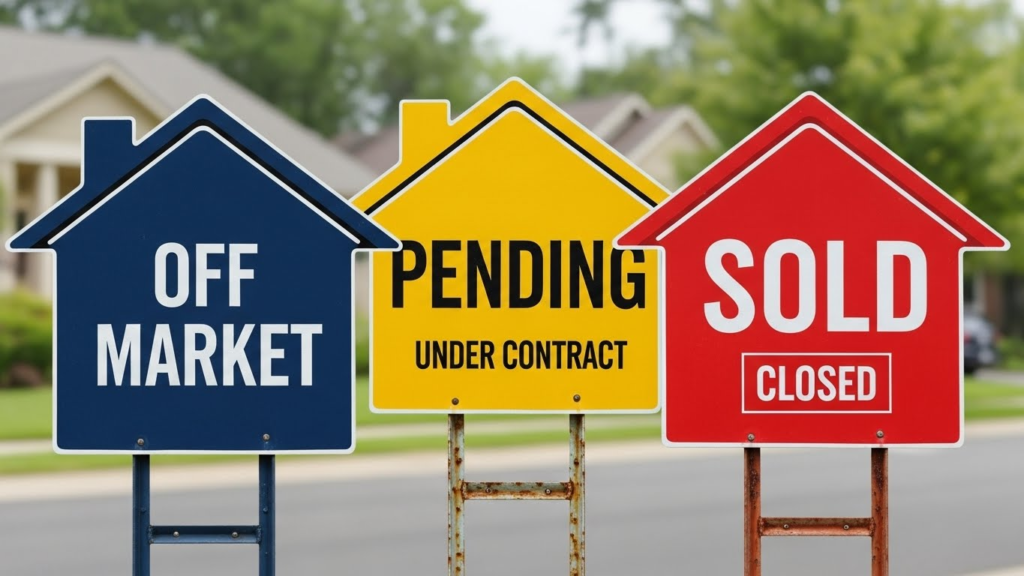
To navigate Zillow effectively, you must understand the hierarchy of property statuses. Confusing “off market” with “pending” can lead to wasted time or missed opportunities.
Active/For Sale
The home is on the MLS, actively marketed, and the sellers are accepting offers. This is the standard status for available inventory.
Pending
“Pending” or “Under Contract” means the seller has accepted an offer from a buyer. The deal is not finalized yet—inspections, appraisals, and financing must still clear—but the house is effectively off the table for new buyers. While you can technically submit a backup offer, the seller is legally bound to the current buyer unless the deal falls through.
Sold
The transaction is complete. Ownership has transferred, money has changed hands, and the deed has been recorded. The property is no longer available.
Off Market
As discussed, this means there is no active listing agreement. Unlike “Pending,” there is no buyer currently trying to close on the home. Unlike “Sold,” this status doesn’t necessarily indicate a recent transfer of ownership; it just means “not currently listed.”
The “Make Me Move” Feature (and Its Legacy)
Years ago, Zillow had a feature called “Make Me Move.” This allowed homeowners to test the waters by posting a price at which they would be willing to sell, without officially listing the home. It was a pre-market status that sat somewhere between “off market” and “for sale.”
Zillow eventually retired this feature, but the psychology behind it remains. Many homeowners listed as “off market” effectively have a “Make Me Move” price in their heads. If approached correctly, these owners can sometimes be converted into sellers, creating an off-market deal.
Implications for Home Buyers
For buyers, off-market properties represent a hidden inventory that requires more effort to access but offers significantly less competition.
The Benefits of Off-Market Hunting
- Less Competition: When a house is on Zillow as “For Sale,” you are competing with every other buyer in the area. With off-market homes, you are likely the only person inquiring.
- Price Negotiation: Without a bidding war driving up the price, you may have more leverage to negotiate a fair deal based on the home’s condition and market value.
- Transaction Privacy: Off-market deals (often called “private sales”) are less public. This can be appealing for both buyers and sellers who value privacy.
- Reduced Stress: You avoid the high-pressure environment of open houses and “highest and best” offer deadlines.
The Risks for Buyers
- Overpricing: Sellers who aren’t officially on the market often have inflated ideas of their home’s value. Without market pressure to correct them, they may demand a premium.
- Lack of Representation: If you approach a homeowner directly, you might find yourself navigating complex legal contracts without an agent’s guidance unless you hire one specifically for the transaction.
- Slower Process: Motivating an off-market owner to sell takes time. They aren’t packed and ready to go like an active seller.
Implications for Home Sellers
For sellers, keeping a property off market (or selling it as a pocket listing) is a strategic choice that differs from the traditional route.
Why Sell Off Market?
- Privacy: High-profile sellers or those going through sensitive life transitions (like divorce) often prefer not to have photos of their bedroom interiors splashed across the internet.
- Exclusivity: In luxury markets, scarcity creates value. Marketing a home as an “exclusive” off-market opportunity can sometimes attract serious, qualified buyers.
- Testing the Waters: Sellers can gauge interest at a certain price point without accumulating “days on market” (DOM), which can make a listing look stale if it sits too long.
The Downsides for Sellers
- Lower Visibility: The MLS is the most powerful marketing tool in real estate. By bypassing it, you limit your buyer pool significantly.
- Potentially Lower Price: Without multiple buyers competing for your home, you might leave money on the table. Bidding wars are the primary driver of above-asking-price sales.
Common Misconceptions About Off-Market Homes
There are several myths surrounding off-market listings on Zillow that need debunking.
Myth 1: Off Market Means Distressed Property
Many people assume off-market deals are only for foreclosures or “fixer-uppers.” While investors often target off-market distressed homes, many off-market properties are pristine, luxury homes owned by people who simply value privacy.
Myth 2: You Can’t Buy an Off-Market Home
False. While you can’t click “buy now,” real estate is fundamentally about agreement between two parties. If you make the right offer to the right owner, any home can be bought.
Myth 3: Zillow’s Status Is Always Real-Time
Zillow is an aggregator. It pulls data from thousands of sources. Sometimes, a house listed as off market was actually listed on the MLS that morning, and Zillow’s feed hasn’t refreshed yet. Always verify with a local real estate agent.
How to Find and Buy Off-Market Properties
If you are serious about finding a home and the active inventory isn’t meeting your needs, pivoting to off-market strategies can be a game-changer.
1. Work with a Connected Real Estate Agent
The most effective way to find off-market homes is through a well-connected local agent. Agents have access to “coming soon” listings within their brokerages and often know which expired listings might still be open to selling. They can also network with other agents to find pocket listings.
2. Direct Mail Campaigns
Real estate investors have used this tactic for decades. If you find a neighborhood you love, you can send personalized letters to homeowners expressing your interest in buying their home. A handwritten note stands out and can sometimes spark a conversation with an owner who was thinking about selling but hadn’t listed yet.
3. Check “Coming Soon” Filters
Zillow and other sites sometimes have a “Coming Soon” filter. These are properties that are about to hit the market but aren’t fully active yet. While not strictly “off market” in the permanent sense, they offer an early-bird advantage.
4. Look for Expired Listings
Ask your agent to pull a list of homes that expired or were withdrawn from the MLS in the last 6 to 12 months. These owners wanted to sell recently. Circumstances may have changed, or they may just need a fresh offer to re-engage.
5. Utilize Real Estate Wholesalers
Wholesalers are investors who find off-market deals, put them under contract, and then assign that contract to a buyer for a fee. This is more common for investment properties and fixer-uppers, but it is a viable source for off-market inventory.
6. Public Records and Tax Auctions
For the adventurous buyer, browsing public records for pre-foreclosures or tax liens can identify owners who might be motivated to sell off market to avoid financial penalties.
The Role of Zestimates in Off-Market Deals
When you view an off-market home on Zillow, the “Zestimate” (Zillow’s estimated market value) is usually the most prominent number on the page.
A Word of Caution: Zestimates are algorithmic estimates based on public data like square footage, tax assessments, and recent sales in the area. They do not account for the interior condition of a home. An off-market home might have a brand-new kitchen that justifies a higher price, or a cracked foundation that lowers the value.
Never use the Zestimate as your sole guide for making an offer on an off-market home. Always run your own comparative market analysis (CMA) or have your agent do so to determine a fair price.
Navigating the Challenges of Off-Market Transactions

Buying a home that isn’t actively listed requires a different approach to due diligence.
Valuation is Tricky
Without an asking price, starting negotiations can be awkward. You don’t want to offer too high, but offering too low might offend the owner. This is where a professional agent’s valuation expertise is invaluable.
Financing Can Be Complex
If the home is being sold “as-is” or is in poor condition, traditional mortgage lenders might be hesitant. You may need to look into renovation loans (like FHA 203k loans) or hard money loans if the property isn’t move-in ready.
Patience is Key
Off-market sellers are rarely in a rush. They haven’t mentally committed to moving in the same way an active seller has. Be prepared for slower response times and a longer negotiation timeline.
Is Targeting Off-Market Homes Worth It?
For the average buyer, focusing solely on off-market homes is likely inefficient. The active market is where the most motivated sellers are. However, treating off-market properties as a supplementary strategy can be incredibly powerful.
If you have very specific needs—like a particular street in a specific school district—monitoring off-market homes allows you to be proactive rather than reactive. Instead of waiting for a house to pop up, you can go out and find it.
Conclusion: Decoding the Status
“Off Market” on Zillow is not a dead end; it is simply a status label indicating the property is not currently participating in the public MLS marketplace. For the casual browser, it means “keep looking.” But for the strategic buyer or investor, it signals potential.
Whether it represents a home that failed to sell, a pocket listing waiting for a connection, or a happy homeowner who might move for the right price, the off-market inventory is vast. By understanding the nuances of this status, utilizing the right professional help, and approaching homeowners with respect and fair offers, you can unlock opportunities that other buyers never even see.
Real estate is not just about what is listed; it is about what is possible. Understanding the “off market” status is your first step toward seeing the full picture of the housing market.