The Real Cost of a Pool in Ground Cost: A Complete 2026 Budget Guide
Imagine stepping into your backyard on a scorching July afternoon. The air is thick, the sun is relentless, but instead of retreating inside to the air conditioning, you dive into crystal-clear, cool water. This is the dream of pool ownership. In-ground pools have long been a symbol of luxury and leisure, transforming ordinary backyards into private resorts. But before you start picking out tile colors or buying inflatable rafts, there is a major hurdle to clear: the price tag.
Figuring out the true pool in ground cost is notoriously difficult. Unlike buying a car, where the sticker price is mostly set, a pool is a custom construction project. Estimates vary wildly based on materials, location, and the specific features you crave. Is it $30,000 or $130,000? The answer is “yes”—it can be either.
This guide will demystify the expenses associated with building an in-ground pool. We will break down the costs by material, look at hidden fees that often catch homeowners off guard, and help you determine if this major investment makes sense for your property.
Breaking Down the Initial Investment
When you ask, “How much does an in-ground pool cost?” you are really asking about three different things: the shell, the installation labor, and the equipment.
On average, homeowners across the United States spend between $50,000 and $90,000 for a turnkey in-ground pool. However, luxury projects can easily soar past $150,000. Let’s look at where that money actually goes.
Material Costs by Pool Type
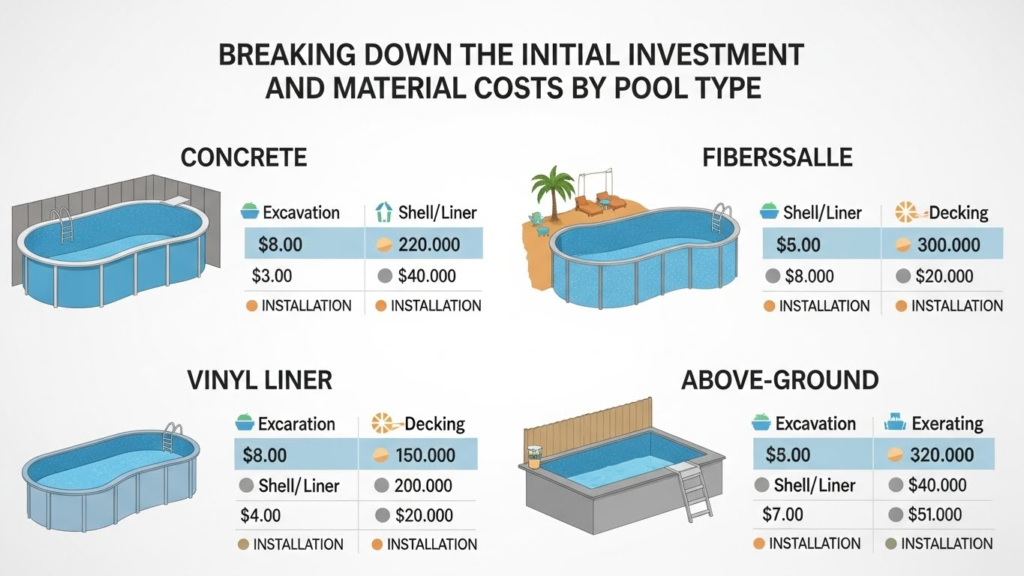
The biggest factor in your budget is the material you choose for the pool shell. There are three main contenders: vinyl liner, fiberglass, and concrete (gunite).
Vinyl Liner Pools
- Average Cost: $40,000 – $65,000
- The Lowdown: Vinyl pools are generally the most affordable upfront option. They consist of a steel or polymer wall structure with a heavy-duty vinyl liner inserted over a sand or cement floor.
- Pros: Lower initial cost; soft surface on the feet; highly customizable shapes.
- Cons: Liners can tear and need replacement every 7-10 years (costing $4,000–$5,000); perceived as less “high-end” by some real estate markets.
Fiberglass Pools
- Average Cost: $55,000 – $95,000
- The Lowdown: Fiberglass pool pricing has risen in recent years due to their popularity. These are factory-molded shells delivered to your home in one piece.
- Pros: Quick installation (weeks instead of months); incredibly durable; non-porous surface resists algae, lowering chemical needs.
- Cons: Limited to shapes and sizes that fit on a truck; higher upfront cost than vinyl.
Concrete (Gunite/Shotcrete) Pools
- Average Cost: $65,000 – $115,000+
- The Lowdown: This is the classic custom pool. Excavators dig a hole, install a rebar framework, and spray concrete over it. It is then finished with plaster, tile, or pebble aggregate.
- Pros: limitless design possibilities (beach entries, grottos, infinity edges); extremely long lifespan for the shell.
- Cons: Longest installation time (3-6 months); rougher surface; highest chemical and maintenance demands; most expensive to build.
Labor and Excavation
It is easy to focus on the pool shell, but the dirt work is a massive part of pool installation expenses. Excavation is not just digging a hole; it involves heavy machinery, precise engineering to prevent collapse, and hauling away tons of dirt.
- Excavation: $2,500 – $5,000 (higher if you hit rock or have limited access).
- Dirt Haul-away: If you can’t keep the dirt on your property for grading, trucking it away costs $1,500 – $3,000.
- Electrical and Plumbing: Specialized labor to run gas lines for heaters and high-voltage wiring for pumps costs $3,000 – $5,000.
Factors That Dramatically Influence Price
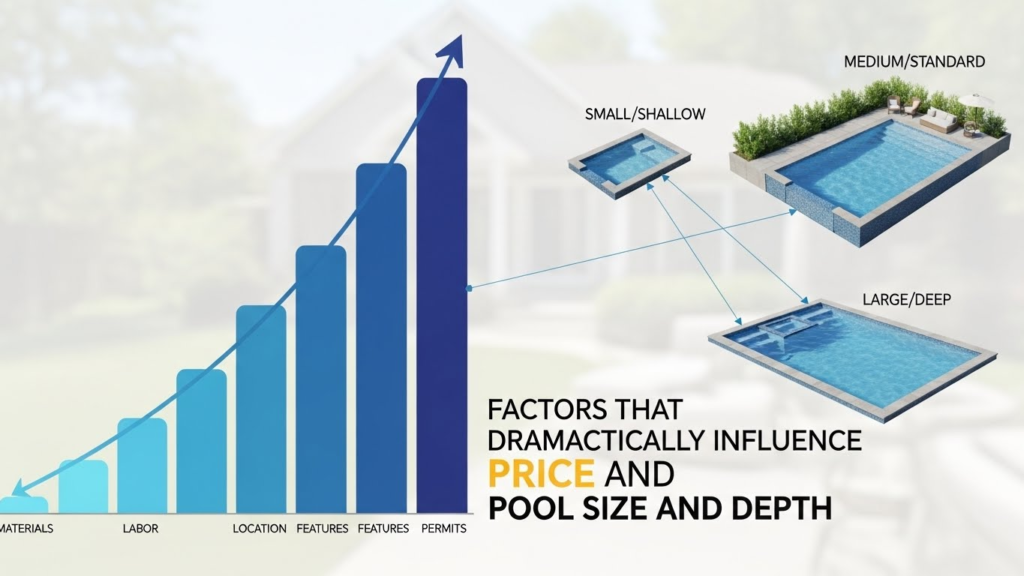
Why does your neighbor’s pool cost $20,000 less than the quote you just received? Several variables shift the pricing needle significantly.
1. Pool Size and Depth
It’s simple math: a larger pool requires more materials, more digging, and more labor. A 12×24 plunge pool will always be cheaper than a 20×40 lap pool. Depth matters too. A deep end for diving requires significantly more excavation and dirt removal than a uniform “sport bottom” pool that is 4-5 feet deep throughout.
2. Geographic Location
The cost of living in your area affects labor rates. A pool builder in rural Ohio charges less than one in Los Angeles or Long Island. Additionally, permit fees vary wildly by municipality. Some towns charge a few hundred dollars; others charge thousands and require expensive drainage studies.
3. Site Accessibility
If your backyard is easily accessible by large dump trucks and excavators, you save money. If access is tight—requiring the removal of fences, driving over neighbors’ lawns (with permission and repair costs), or using smaller, slower machinery—labor costs skyrocket.
4. Soil Conditions
This is the “wild card” of pool building. If excavators hit a high water table, they must install dewatering systems. If they hit solid bedrock, they need hydraulic hammers. These surprises can add $5,000 to $10,000 to the bill overnight.
The “Hidden” Costs: Additional Features
A pool is rarely just a hole with water. To make it usable and beautiful, you need the surroundings. This is where budgets often break.
- Decking and Patios: You need somewhere to put the lounge chairs. Concrete coping and decking generally cost $8 to $15 per square foot, while pavers or natural stone can run $25 to $40 per square foot. A modest patio can easily cost $10,000.
- Fencing: By law, you must secure the pool area. A safety fence generally costs $20 to $60 per linear foot. For an average yard, budget $5,000 – $8,000.
- Heating: Extending your swim season with a gas or electric heat pump adds $3,000 – $6,000 upfront.
- Covers: A simple winter cover is cheap, but an automatic safety cover—which provides peace of mind and retains heat—costs $10,000 – $15,000.
- Water Features & Lighting: Waterfalls, deck jets, and color-changing LED lights add ambiance but also cost. Budget $1,500 – $5,000 for these upgrades.
In-Ground vs. Above-Ground: A Cost-Benefit Analysis
If the numbers above are making you sweat, you might consider an above-ground pool. How do they compare?
The Cost Gap
The price difference is staggering. An above-ground pool kit can cost between $3,000 and $8,000. Even with professional installation and a nice deck, you are likely looking at $15,000 total. Compare that to the $65,000+ for an in-ground project.
The Value Proposition
- In-Ground: Adds permanent value to the home (though rarely 100% ROI). It is an aesthetic asset, integrates with landscaping, and lasts for decades. It is considered “real estate.”
- Above-Ground: Considered “personal property” and usually adds zero value to a home appraisal. They are harder to integrate aesthetically into a landscape and generally have a shorter lifespan (10-15 years).
Verdict: If budget is the primary constraint and you just want to swim, go above-ground. If you are looking for a lifestyle upgrade, a landscaping centerpiece, and long-term enjoyment, the pool in ground cost is the price of admission.
Tips for Budgeting and Saving on Installation
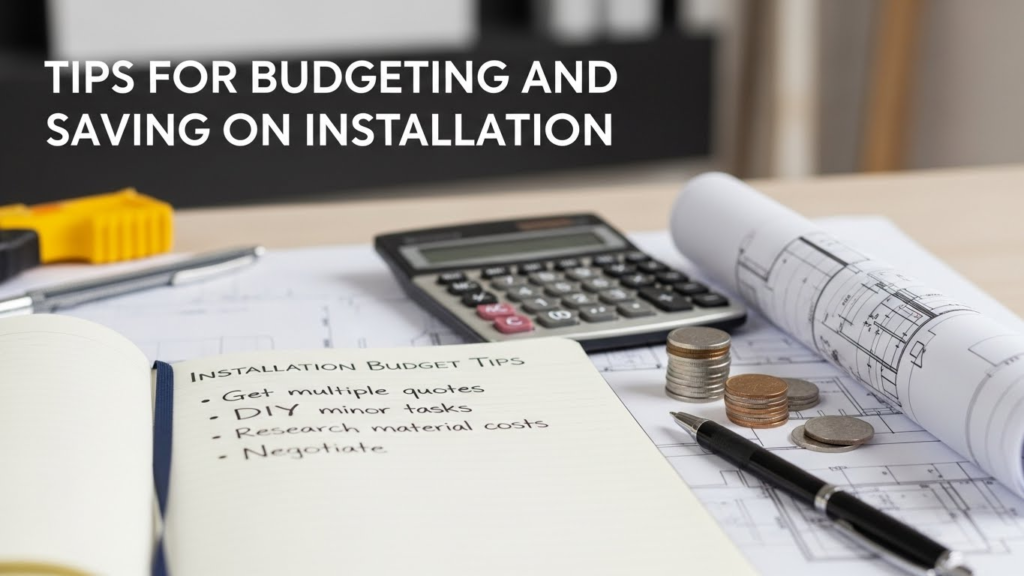
You want the pool, but you don’t want to go bankrupt. Here are strategic ways to manage the expense without sacrificing quality.
1. Build in the Off-Season
Pool builders are swamped in spring and summer. If you sign a contract in late autumn or winter, you might secure “early buy” discounts on materials or labor. Builders are eager to keep their crews busy during slow months.
2. Choose Vinyl for Size
If you want a massive pool but have a limited budget, vinyl is your best friend. You get the most “square footage of water” per dollar with a liner pool compared to fiberglass or concrete.
3. Keep the Shape Simple
Curves, kidney shapes, and free-form lagoons are beautiful, but they complicate the build. A rectangular pool is easier to dig, easier to form, and materials (like automatic covers) are standard sizes, which keeps costs down.
4. Phase Your Landscaping
You need the pool, the plumbing, and the basic concrete collar (coping) immediately. However, elaborate landscaping, outdoor kitchens, and pergolas can wait. Get the pool in the ground now and add the luxury surroundings in year two or three.
5. Skip the Deep End
Diving boards are fun, but they require deep, specialized “hopper” bottoms that increase excavation and material costs. A “sport pool” with two shallow ends and a deeper middle (usually 5 feet) is perfect for volleyball and lounging, and it costs less to build and heat.
The Long Game: Maintenance and Long-Term Costs
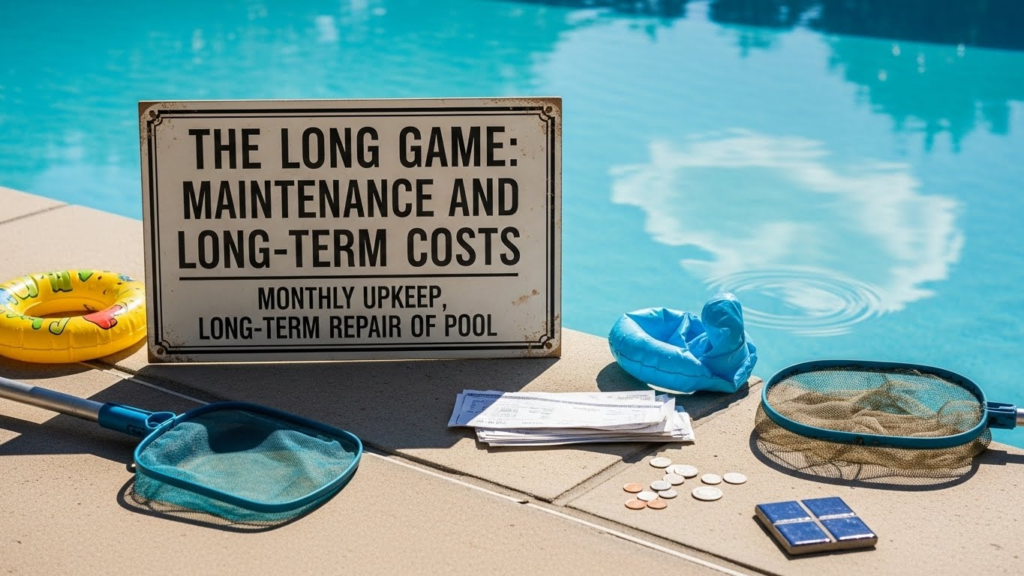
The check you write to the builder is just the beginning. You must also budget for the ongoing pool maintenance costs. A pool is like a pet; it needs feeding and care.
Monthly Upkeep
- Electricity: Running the pump and filter adds to your electric bill. Variable-speed pumps are standard now and save money, but still expect an extra $30–$50 per month. If you run a heat pump, that can jump to $100–$300 monthly during the swim season.
- Chemicals: Chlorine, pH balancers, alkalinity increasers, and shock. Budget roughly $50–$100 per month during the season if you do it yourself.
- Water: You will lose water to evaporation and splashing. Topping off the pool affects your water bill.
Long-Term Repairs
You must build a “sinking fund” for future repairs.
- Vinyl Liners: Replaced every 7-10 years (~$4,500).
- Concrete Resurfacing: Plaster needs redoing every 10-15 years (~$10,000).
- Equipment: Pumps, filters, and heaters last 5-10 years. Replacing a heater can cost $3,000; a pump $1,500.
Pro Tip: Fiberglass pools often have the lowest long-term ownership costs because they don’t need resurfacing or liner replacements, and their smooth surface requires fewer chemicals.
Financing Your Oasis
Few people pay cash for a $70,000 pool. Most homeowners finance the project.
- Home Equity Line of Credit (HELOC): Often the best interest rates. You borrow against the equity in your home. Interest is sometimes tax-deductible (check with your accountant).
- Construction Loan: Some lenders offer specific pool loans. These are unsecured personal loans, meaning they don’t put a lien on your house, but interest rates are higher than HELOCs.
- Dealer Financing: Many large pool companies partner with lenders to offer financing packages directly.
Is It Worth It?
The pool in ground cost is significant. It is likely the second biggest purchase you will make after your home itself. Financially, you will likely recoup about 50% to 70% of the cost when you sell your home, depending on your local real estate market.
But the return on investment isn’t just financial. It’s measured in birthday parties, quiet morning swims, teaching your kids to dive, and having a sanctuary in your own backyard.
If you decide to proceed, get at least three quotes from reputable builders. Ask to see their portfolio and talk to previous clients. A pool is a complex construction project; the lowest bid is often the lowest for a reason. Prioritize quality workmanship and clear communication over the rock-bottom price.
When you dive into that cool water for the first time, knowing exactly what you paid for and having budgeted correctly, the experience is that much sweeter.