
How Often Do Contingent Offers Fall Through? (And How to Prevent It)
You have found the perfect house. The kitchen island is massive, the backyard is fenced for the dog, and the neighborhood is quiet. You put in an offer. The seller accepts. But there is a catch: the offer is contingent.
Now, you are stuck in limbo. You are wondering, “How often do contingent offers fall through?” Are you packing boxes for a move that might never happen?
This is the most nerve-wracking part of the home buying process. The deal looks done on paper, but it hangs by a thread. Whether you are a buyer hoping your dream home becomes reality, or a seller praying the deal sticks, understanding the odds is crucial.
In this guide, we will break down the success rates of contingent offers, why they fail, and exactly what you can do to keep your real estate transaction on the rails.
The Reality Check: What Do the Numbers Say?

Real estate is a game of probabilities. While every market is different, national data gives us a clear picture of the risks involved with contingencies.
According to data from the National Association of Realtors (NAR), the vast majority of real estate contracts close successfully. However, roughly 5% to 7% of purchase contracts fall through entirely. While that number seems low, it doesn’t tell the whole story. A much larger percentage—often cited around 25% to 30%—experience delays or renegotiations directly related to contingencies.
When we ask, “how often do contingent offers fall through,” we have to look at which contingency is in play. A home sale contingency (where the buyer must sell their current home first) is far riskier than a standard inspection contingency. In competitive markets, the failure rate for offers dependent on another home sale can climb significantly higher because sellers simply move on to non-contingent buyers.
The short answer? Most deals close, but contingent offers are the number one reason they don’t.
Understanding Real Estate Contingencies
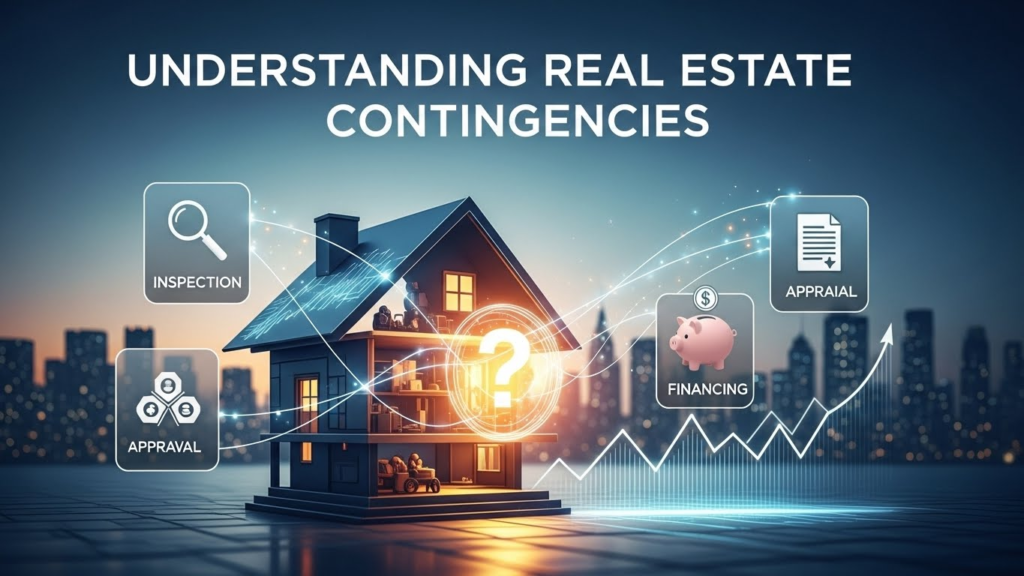
Before we dissect why deals die, we need to define the safety nets that buyers use. A contingency is essentially a clause in the purchase agreement that says, “I will buy this house, if…”
If the “if” doesn’t happen, the buyer can walk away with their earnest money deposit intact.
The “Big Three” Contingencies
Most residential transactions involve these three standard clauses:
- Inspection Contingency: This gives the buyer the right to have professional inspectors check the property. If major issues arise (like a cracked foundation or black mold), the buyer can request repairs, ask for a price reduction, or cancel the contract.
- Appraisal Contingency: Lenders will only loan money based on the home’s appraised value. If the agreed-upon price is $500,000 but the appraiser says it is only worth $480,000, the deal creates an appraisal gap. Unless the buyer covers the difference or the seller lowers the price, the deal falls through.
- Financing Contingency: This protects the buyer if their loan is denied. Even with a pre-approval letter, final underwriting can uncover issues that kill the financing.
The Home Sale Contingency: The Deal Killer
This is the riskiest type of contingent offer. It happens when a buyer needs the equity from their current home to purchase the new one. Sellers dislike this contingency because their sale is now dependent on a third party (the buyer’s buyer) whom they have never met. This chain reaction increases the probability that the contingent offers fall through significantly.
Why Do Contingent Offers Fail?

When a deal collapses, it is rarely a surprise to everyone involved. There are usually warning signs. Let’s look at the primary reasons real estate contingencies cause deals to crumble.
1. The Financing Falls Apart
This is the most heartbreaking reason because it often happens at the eleventh hour. A buyer might have a solid pre-approval, but things change during the escrow period.
Common financing failures include:
- Job Loss or Change: If a buyer changes jobs week before closing, lenders may pull the loan.
- New Debt: If the buyer buys a new car or furniture on credit before the house closes, their debt-to-income ratio shifts, disqualifying them from the mortgage.
- Interest Rate Hikes: A sudden jump in rates can push the monthly payment out of the buyer’s approved range.
2. The Inspection Reveals “Deal Breakers”
No house is perfect, but some flaws are too expensive to fix. The inspection period is where emotions run high.
Small issues like a leaky faucet rarely kill deals. However, structural problems, old electrical wiring (like knob-and-tube), or roof replacements can cost tens of thousands of dollars. If the seller refuses to fix them and the buyer refuses to accept the house “as-is,” the contract is voided.
3. The Appraisal Comes in Low
In rapidly rising markets, bidding wars often drive prices above fair market value. An appraiser’s job is to protect the bank’s investment, not validate a bidding war.
If the appraisal comes in low, someone has to budge. If the buyer doesn’t have the extra cash to cover the gap and the seller won’t drop the price, the financing contingency kicks in, and the deal dies.
4. Cold Feet (Buyer’s Remorse)
Sometimes, the contingency is just an exit strategy. A buyer might feel overwhelmed by the commitment or find a different property they like better. They might use the inspection report as a convenient excuse to back out, even if the issues are minor.
5. Title Issues
Title contingencies are less discussed but equally fatal. If a title search reveals a lien on the property (unpaid taxes, contractor disputes) or unclear boundary lines, the property cannot be sold with a “clean title.” Resolving these issues can take months, causing buyers to walk away.
The Chain Reaction: Home Sale Contingencies

We need to dedicate a specific section to the home sale contingency because it is the most complex scenario in the home buying process.
Imagine a train. The engine is the seller of the new home. The first car is the buyer. The second car is the person buying the buyer’s old home. If the person in the second car loses their financing, the whole train stops.
Kick-Out Clauses
To mitigate this risk, sellers often include a “kick-out clause.” This allows the seller to keep marketing the house. If they get a better, non-contingent offer, they give the original buyer a set time (usually 24-72 hours) to remove their home sale contingency or walk away.
If you are a buyer with a home to sell, the kick-out clause is your enemy. It means your “accepted offer” is actually quite fragile.
How to Protect Your Deal (For Buyers)

You don’t want to be part of the statistic regarding how often contingent offers fall through. You want keys in your hand. Here is how to strengthen your position and ensure your contingencies don’t become deal-killers.
Get Fully Underwritten, Not Just Pre-Approved
A pre-approval letter is good; a fully underwritten pre-approval is gold. This means an underwriter has already vetted your financials, income, and assets. It effectively removes the uncertainty from the financing contingency, making your offer nearly as strong as cash.
Be Strategic with Inspections
Instead of a general inspection contingency that allows you to walk away for any reason, consider a “pass/fail” inspection or an “informational only” inspection. This tells the seller you won’t nitpick small repairs, but you still protect yourself against major disasters.
Alternatively, set a repair deductible. Write into the contract that you will not ask for repairs costing less than $1,000. This assures the seller that you are serious and won’t nickel-and-dime them over a loose doorknob.
Bridge the Appraisal Gap
If you are bidding over the asking price, be prepared for a low appraisal. If you have extra cash savings, include an “appraisal gap coverage” clause. This states that you agree to pay up to a certain amount (e.g., $5,000 or $10,000) over the appraised value if it comes in low.
Sell Your Home First
It is inconvenient, but selling your current home before making an offer on a new one is the only way to avoid a home sale contingency. You might need to rent for a few months or stay with family, but you will be a much more powerful buyer.
How to Protect Your Sale (For Sellers)

Sellers worry about contingent offers falling through just as much as buyers. A failed deal means the house goes back on the market, usually with a “stigma” attached. Future buyers will wonder, “What is wrong with it? Why did the last deal fail?”
Here is how to vet contingent offers:
Scrutinize the Buyer’s Financing
Do not just look at the offer price; look at the lender. Is it a reputable local lender or a big internet bank known for delays? Ask your agent to call the buyer’s loan officer to verify how solid the file is.
Limit the Contingency Timelines
Time kills deals. Keep the contingency periods short.
- Inspection: 7-10 days maximum.
- Appraisal: 14-21 days.
- Loan Commitment: 21-30 days.
The tighter the timeline, the faster you know if the deal is solid.
Demand a High Earnest Money Deposit
A buyer who puts down 1% earnest money can walk away easily. A buyer who puts down 3% to 5% has “skin in the game.” A larger deposit signals commitment and makes buyers think twice before backing out for frivolous reasons.
Use the Kick-Out Clause
If you accept a home sale contingency, always insist on a kick-out clause. Never take your home completely off the market for a buyer who hasn’t sold their own home yet.
Navigating the “Pending” Status
When you see a home listed as “Pending” or “Under Contract,” it usually means contingencies are still active.
If you are a backup buyer interested in a house that is pending, don’t lose hope completely. Remember, contingent offers fall through often enough that it is worth telling your agent to stay in touch with the listing agent. You can submit a “backup offer” that automatically goes into effect if the primary deal crashes.
For the active buyer and seller, this period requires constant communication.
- Buyers: Respond to lender requests immediately. Do not delay sending tax documents or bank statements.
- Sellers: Make the home accessible for inspectors and appraisers. A cancelled appointment delays the timeline and adds risk.
The Emotional Toll of Failed Offers

We often talk about the financial side, but the emotional impact of a failed contingent offer is heavy.
For buyers, it is the loss of a future they had already imagined. They mentally placed their furniture in the living room and picked out paint colors. When the deal dies, it feels like a breakup.
For sellers, it is frustration. They cleaned the house, left for showings, and mentally moved on. Now they have to start over, often questioning if they priced the home correctly or if the market has shifted.
Coping Mechanism: Keep your expectations managed. Until the closing disclosure is signed and the deed is recorded, the house is not sold. Treat the contingency period as a probation period, not a victory lap.
Case Study: The “Perfect” Deal That Almost Wasn’t

Let’s look at a hypothetical scenario to illustrate how these mechanics work in the real world.
The Scenario:
Sarah and Mike (Buyers) make an offer on the Johnsons’ (Sellers) home for $450,000. The offer is contingent on the sale of Sarah and Mike’s condo.
The Problem:
Sarah and Mike find a buyer for their condo quickly. However, the buyer of the condo has an FHA loan. During the FHA appraisal of the condo, the appraiser flags peeling paint on the exterior. FHA loans have strict safety requirements, and peeling paint (potential lead hazard) is a deal-killer.
The Ripple Effect:
The condo sale halts. Because the condo sale halts, Sarah and Mike cannot buy the Johnsons’ house. The Johnsons, meanwhile, are purchasing a retirement home in Florida and need the funds from their sale to close.
The Resolution:
Instead of letting the deal die, the agents collaborate. Sarah and Mike pay to have the condo painted immediately. The Johnsons agree to extend the closing date by one week to accommodate the repair and re-inspection.
The Lesson:
Contingent offers fall through when parties are rigid. When buyers and sellers are willing to negotiate and solve problems creatively, even difficult contingencies can be overcome.
When Should You Waive Contingencies?
In hyper-competitive markets, you will hear advice to “waive contingencies” to win the bid. Is this smart?
Waiving Inspection:
- Risk: Extremely High. You are buying the house blind.
- When to do it: Only if you are a contractor, have significant cash reserves for repairs, or performed a “pre-inspection” before submitting the offer.
Waiving Appraisal:
- Risk: Medium/High. You commit to paying the difference between the offer price and appraised value.
- When to do it: Only if you have verified cash funds to cover a potential gap of $10k, $20k, or more.
Waiving Financing:
- Risk: Catastrophic. If the loan fails, you lose your deposit and could be sued.
- When to do it: Only if you can pay cash for the home if the financing fails.
FAQs About Contingent Offers
1. Can a seller back out of a contingent offer?
Generally, no. Once the seller accepts the offer, they are bound to the contract terms. They can only back out if the buyer fails to perform (e.g., misses a deadline) or if a specific clause, like a kick-out clause, is triggered.
2. How long do contingencies last?
It varies by contract and state laws. Standard periods are 7-10 days for inspections and 21-30 days for financing. However, these are negotiable dates set when the offer is written.
3. Do cash offers have contingencies?
Yes, they can. Cash buyers often still want inspections. However, they do not have financing or appraisal contingencies, which is why sellers prefer them.
4. What happens to the earnest money if a contingent offer falls through?
If the deal falls through due to a valid contingency (e.g., the inspection found termites), the buyer typically gets their earnest money back. If the buyer backs out for a reason not covered by a contingency, the seller keeps the money.
5. Is a “pending” house sold?
No. Pending means there is an accepted offer, but the sale has not closed. Contingencies may still be active.
Conclusion: Increasing Your Odds of Success
So, how often do contingent offers fall through? Often enough to be a concern, but rarely enough that you should panic. The 5-7% failure rate statistic is a baseline, but your specific transaction depends on the quality of the contract and the preparation of the parties involved.
If you are a buyer, strong preparation—like full underwriting and realistic expectations—is your shield. If you are a seller, vetting the buyer’s financial strength and enforcing tight timelines is your defense.
Real estate transactions are complex living organisms. They require care, attention, and flexibility. By understanding the mechanics of the home buying process and the nature of real estate contingencies, you can navigate the choppy waters of escrow and make it safely to the closing table.
Don’t let the fear of a failed offer paralyze you. Use this knowledge to build a better deal. Whether you are buying or selling, transparency and communication are the ultimate tools to ensure your contingent offer turns into a “Sold” sign.