
How Much Does It Cost to Cut Down a Tree? Comprehensive Price Guide
Having a looming, potentially dangerous tree in your yard can be stressful. Whether it’s leaning too close to your roof, showing signs of disease, or simply blocking too much sunlight, you know it needs to go. But before you call the pros, one big question is likely on your mind: how much is this going to cost?
The price of tree removal isn’t a one-size-fits-all figure. It varies wildly based on height, location, species, and complexity. While you might pay a few hundred dollars for a small sapling, taking down a massive oak near power lines could run into the thousands.
This guide breaks down every factor influencing the price tag. We will explore average costs, hidden fees, and how to get the best value for your money. By the end, you’ll know exactly what to expect when you request a quote.
The Average Cost of Tree Removal
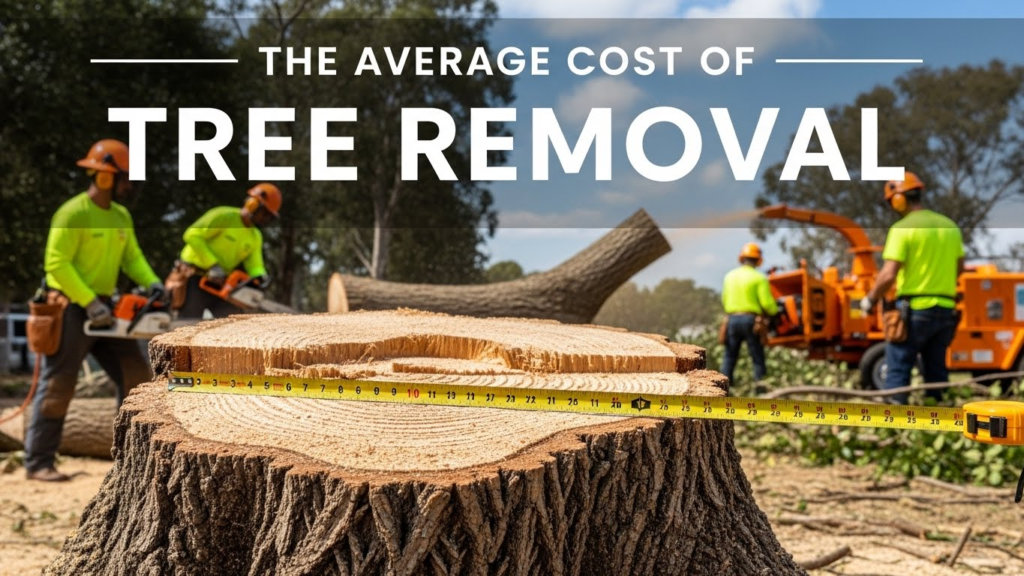
Let’s start with the baseline numbers. On average, homeowners in the United States spend between $400 and $1,200 to have a tree removed. The national average usually settles around $750.
However, extremes exist on both ends. A small tree might cost as little as $200, while a complex removal project involving cranes, large crews, or hazardous conditions can easily exceed $2,000.
Pricing by Tree Size
Size is the most significant factor in determining your tree removal cost. Taller trees require more labor, specialized equipment, and higher safety risks. Here is a general breakdown of what you might pay based on height:
- Small Trees (Under 30 feet): Examples include Dogwoods or small fruit trees. Expect to pay between $200 and $450.
- Medium Trees (30 to 60 feet): This category includes many Maples and Elms. Prices typically range from $450 to $1,000.
- Large Trees (60 to 80 feet): Mature Oaks or Pines often fall here. Costs jump to $1,000 to $1,500.
- Extra Large Trees (Over 80 feet): Massive species like Redwoods or Sequoyas are the most expensive, often ranging from $1,500 to $3,000+.
Key Factors That Influence Tree Removal Cost
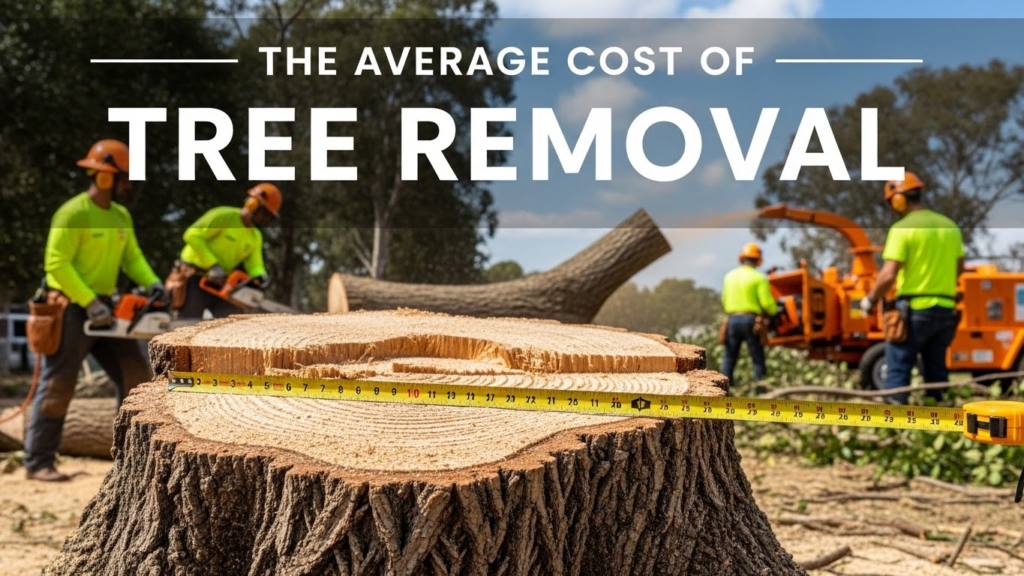
While height provides a ballpark figure, several other variables will adjust the final quote. Tree cutting services calculate their bids based on the difficulty and time the job requires.
1. Tree Condition and Health
Surprisingly, a dead or dying tree might be cheaper to remove than a healthy one because it is lighter and easier to cut. However, if the tree is unstable and dangerous to climb, the price may increase because the crew must use cranes or bucket trucks instead of climbing ropes.
If a tree has fallen already (due to a storm, for example), the cost is significantly lower, usually just covering the cutting and hauling away of debris.
2. Diameter and Trunk Thickness
Height isn’t the only size metric. A short but incredibly thick tree—like an old Oak with a massive girth—will take longer to cut. Thick trunks produce more wood to haul away, which impacts the labor hours and disposal fees.
3. Tree Species
The type of tree matters. Some species have denser wood or complex branch structures that make removal harder.
- Pine Trees: Often cheaper to remove because they are softwood and have fewer lower branches.
- Oak Trees: These are hardwoods with heavy branches, making them more labor-intensive and expensive.
- Palm Trees: Costs vary by species, but they are generally less expensive than large hardwoods unless they are exceptionally tall.
4. Accessibility and Location
Where is the tree located? If it stands alone in the middle of an empty field, the crew can fell it quickly. If it is squeezed between your house and a neighbor’s fence, or looming over a swimming pool, the process becomes surgical.
Difficult access means the crew cannot just let branches fall. They must rope them down piece by piece. If they can’t get their heavy machinery close to the tree, they may have to carry logs by hand, increasing labor time and the final cutting down a tree price.
5. Emergency Services
Did a storm knock a branch onto your roof at 2 AM? Emergency tree removal is premium service. You can expect to pay significantly more—often double or triple the standard rate—for after-hours or immediate response work.
Additional Costs and Services
When you see a base price for tree removal, it often covers only the act of cutting the tree down to a stump. It rarely includes finishing touches. Be sure to ask about these add-ons when seeking affordable tree removal quotes.
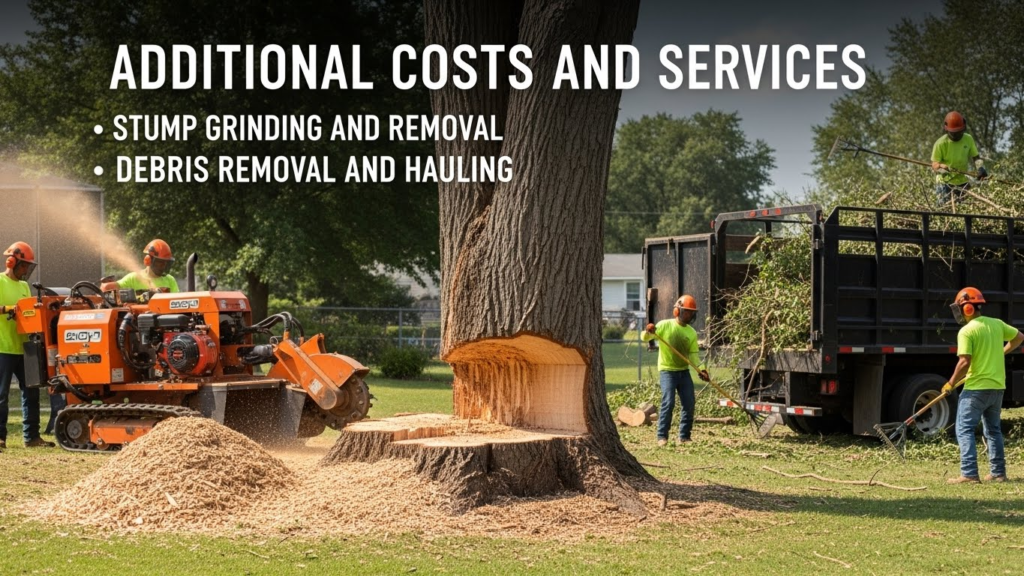
Stump Grinding and Removal
Cutting down a tree leaves a stump. You generally have two choices: leave it to rot (which takes years and can attract pests like termites) or remove it.
- Stump Grinding: This is the most common method. A machine grinds the wood into chips below the soil line. Prices range from $150 to $500 depending on the stump’s diameter.
- Full Stump Removal: This involves pulling the entire root ball out of the ground. It is much more expensive and invasive to your yard, often costing $400 to $800+.
Debris Removal and Hauling
Does the quote include hauling away the wood? Some companies leave the logs for you to deal with. If you want the site cleared completely, expect to pay an extra $50 to $150 for hauling services.
Log Splitting
If you have a fireplace, you might want to keep the wood. Many services offer to split the logs into firewood for you. This service usually costs an extra $75 to $100 per hour.
Travel Fees
If you live in a remote area, tree service companies may charge a travel fee (trip charge) to cover their fuel and drive time. This is typically a flat fee or a per-mile charge.
Regional Price Differences

The cost of living in your area affects labor rates for tree services.
- Urban Areas: In cities with higher living costs (like New York or San Francisco), prices will be at the higher end of the spectrum due to insurance costs and higher wages.
- Rural Areas: Prices may be lower, but travel fees could apply if the service provider has to drive a long distance.
Here is a quick look at potential regional variances:
- West Coast: Higher costs for large conifers and strict environmental regulations.
- East Coast: Variable costs; hardwood removal is common and pricier.
- Midwest: Generally more affordable rates due to lower cost of living and flatter terrain.
Can I Remove a Tree Myself? (DIY vs. Professional)
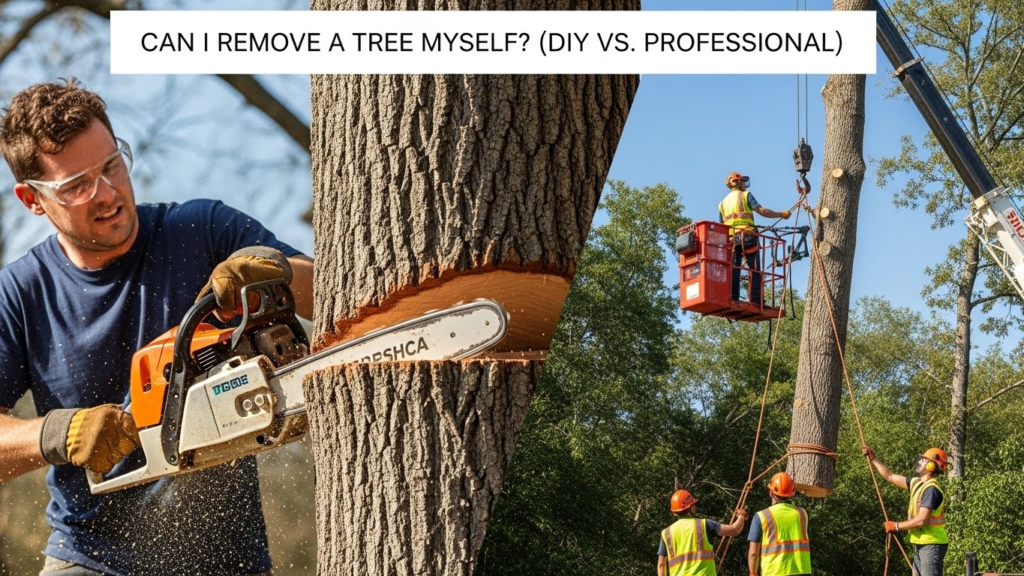
Homeowners often wonder if they can save money by doing the job themselves. While cutting down a small sapling is a manageable weekend project, tackling a large tree is incredibly dangerous.
The Risks of DIY
- Gravity is unpredictable: Trees rarely fall exactly where you think they will without professional guidance ropes and wedges.
- Equipment danger: Chainsaws are powerful and dangerous tools. Kickback injuries are common among amateurs.
- Property damage: Dropping a heavy limb on your roof, car, or fence will cost far more in repairs than hiring a pro.
- Personal injury: Tree work consistently ranks as one of the most dangerous professions in the world. Falling from a ladder or being struck by falling wood can be fatal.
When to Call a Pro
If the tree is taller than 10 feet, near power lines, or close to structures, hire a professional. The money you save on DIY is not worth the risk to your life or home. Professional tree cutting services carry liability insurance, meaning if something goes wrong, you aren’t stuck with the bill.
How to Save Money on Tree Removal
Finding affordable tree removal doesn’t mean hiring the cheapest, unlicensed guy with a truck. You want quality work at a fair price. Here are smart ways to lower the bill:
1. Leave the Debris
If you have a way to dispose of the wood, or if you want it for firewood, ask the company to just cut the tree and leave the wood. This cuts out the hauling fee.
2. Keep the Stump
If the stump is in an inconspicuous corner of the yard, you might not need to grind it immediately. You can treat it with chemicals to accelerate rotting or cover it with a planter.
3. Ask for Group Discounts
Do your neighbors have trees that need trimming or removal? Companies often offer a discount if they can do multiple jobs on the same street in one day, as it saves them travel and setup time.
4. Wait for the Off-Season
Tree companies are busiest in spring and summer. If your tree isn’t an immediate hazard, wait until late fall or winter. Demand drops during the colder months, and companies may offer lower rates to keep their crews busy.
5. Get Multiple Quotes
Never settle for the first price you hear. Get detailed estimates from at least three different companies. This gives you leverage and ensures you aren’t being overcharged.
Understanding Tree Removal Regulations
Before you schedule the work, check your local laws. Many cities have strict ordinances protecting certain tree species or trees of a specific size.
- Permits: You may need a permit to remove a tree, even on private property. Fines for removing a protected tree without a permit can reach thousands of dollars.
- HOA Rules: If you live in a Homeowners Association, check their bylaws. They often have strict rules about tree removal and aesthetics.
Your tree service provider should be familiar with these regulations, but ultimately, the responsibility falls on the homeowner.
How to Hire the Right Tree Removal Service
Choosing the right contractor is just as important as the price. A bad contractor can leave your yard in ruins or disappear with your deposit.
Checklist for Hiring:
- Insurance is Non-Negotiable: Ensure they have both liability insurance and worker’s compensation. Ask to see the certificate. If an uninsured worker gets hurt on your property, you could be liable for their medical bills.
- Check Credentials: Look for certification from the International Society of Arboriculture (ISA). Certified arborists are trained in the art and science of tree care.
- Read Reviews: Check Google and Yelp reviews. Look for comments about punctuality, cleanup, and hidden fees.
- Get it in Writing: Do not accept a handshake deal. Get a written estimate that details exactly what is included (stump grinding, hauling, cleanup) and the total price.
Signs You Need to Remove a Tree Immediately
Sometimes cost is secondary to safety. If you spot these red flags, arrange for removal as soon as possible:
- Hollow Trunk: If the trunk sounds hollow when you knock on it, the structural integrity is compromised.
- Deep Cracks: large splits in the trunk indicate the tree is failing.
- Dead Branches: If more than 50% of the tree is dead, it likely cannot be saved.
- Leaning: A sudden lean indicates root failure. (Note: A tree that has grown at a lean over many years may be safe, but a new lean is dangerous).
- Fungi Growth: Mushrooms growing at the base of the tree often indicate root rot.
Conclusion
The cost to cut down a tree is an investment in the safety and beauty of your property. While the average homeowner spends around $750, your specific tree removal cost will depend on the unique challenges your tree presents.
Remember, the goal isn’t just to find the lowest cutting down a tree price, but to find a service that performs the job safely and effectively. By understanding the factors that drive costs—from tree height to stump grinding—you can budget effectively and avoid surprise fees.
Don’t wait until a storm brings a dangerous tree down for you. Assess your property, gather multiple quotes from reputable tree cutting services, and choose a provider who prioritizes safety and transparency.


