
How Much Does It Cost to Carpet a Room?
Thinking about new carpet for a room in your home? The feeling of soft, fresh carpet under your feet can transform a space, making it warmer, quieter, and more comfortable. But before you start picking out colors, the big question is: how much does it cost to carpet a room? The answer isn’t a single number, as it depends on many factors, from the size of your room to the type of carpet you choose.
This guide will break down all the expenses involved in a carpeting project. We will explore carpet material prices, installation labor costs, and other potential charges you might encounter. By the end, you’ll have a clear understanding of the total cost to carpet a room and know how to budget for your project effectively.
Understanding the Average Cost to Carpet a Room
For a standard 12×12 foot room (144 square feet), the average cost to install new carpet can range from $700 to $2,500. This wide range reflects the significant variation in material quality, labor rates, and project complexity. A budget-friendly project might fall on the lower end, while a high-end, premium installation could exceed this estimate.
The total price is typically calculated per square foot. On average, you can expect to pay between $3.50 and $11 per square foot for both the carpet and professional installation. Breaking this down, the carpet itself usually costs $2 to $7 per square foot, while labor for installation adds another $0.50 to $4 per square foot.
Key Factors Influencing Carpeting Costs
Several elements contribute to the final price tag of your carpeting project. Understanding these will help you see where your money is going and where you might be able to save.
- Room Size and Shape: The larger the room, the more materials and labor you will need, increasing the overall cost. Rooms with irregular shapes, stairs, or closets require more cutting and fitting, which can increase labor time and expenses.
- Carpet Material: The type of fiber your carpet is made from is one of the biggest cost drivers. Options range from inexpensive synthetic fibers to luxurious, natural wool.
- Carpet Padding: The cushion underneath your carpet is crucial for comfort and durability. Padding prices vary based on thickness and material.
- Labor and Installation: Professional installation is a significant part of the budget. Costs can vary based on your geographic location and the complexity of the job.
- Old Flooring Removal: If you have existing carpet or other flooring that needs to be removed, this will often incur an additional charge.
- Subfloor Preparation: Your subfloor must be clean, level, and dry before new carpet can be installed. Any necessary repairs will add to the cost.
Detailed Breakdown of Carpet Material Prices
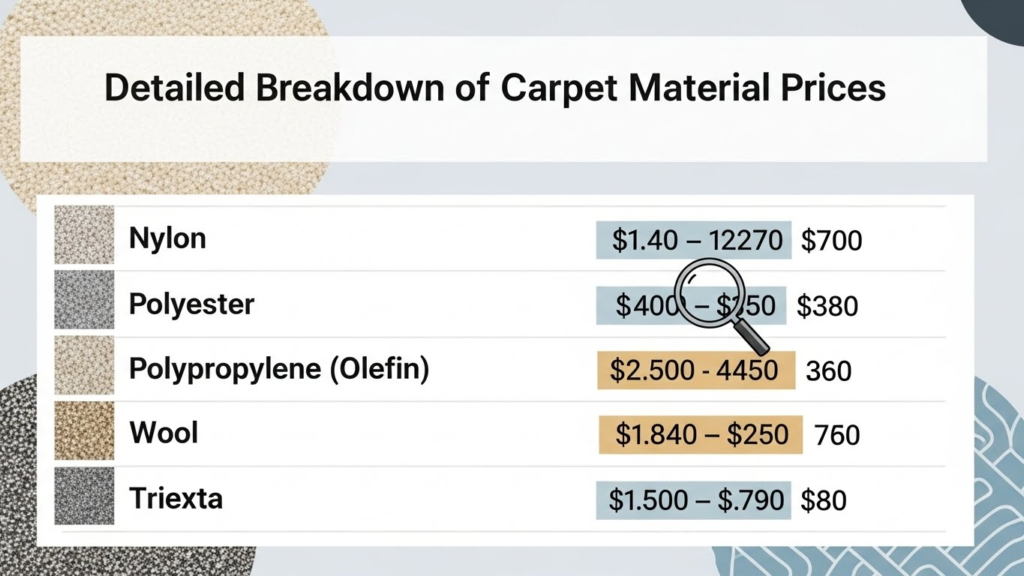
The carpet itself will be the largest single expense in your budget. The price is determined by the fiber type, pile, and overall quality. Let’s explore the most common options and their typical price ranges per square foot.
Synthetic Carpet Fibers
Synthetic carpets are popular because they offer a great balance of durability, stain resistance, and affordability. They account for the vast majority of carpets sold today.
Nylon ($3 to $7 per square foot)
Nylon is the most popular and durable carpet fiber available. It’s known for its excellent resilience, meaning it bounces back well from foot traffic and heavy furniture. This makes it a great choice for high-traffic areas like living rooms, hallways, and stairs. While it is one of the more expensive synthetic options, its longevity often makes it a worthwhile investment.
- Pros: Highly durable, excellent resiliency, good stain resistance when treated.
- Cons: More expensive than other synthetics.
Polyester (PET) ($2 to $5 per square foot)
Polyester carpet is prized for its vibrant, fade-resistant colors and luxurious, soft feel. It’s also naturally stain-resistant. Many polyester carpets are now made from recycled materials, like plastic bottles, making them an eco-friendly choice. However, it is not as resilient as nylon and can be prone to matting in high-traffic areas.
- Pros: Exceptionally soft, naturally stain and fade resistant, often made from recycled materials.
- Cons: Less durable than nylon, can mat down over time.
Olefin (Polypropylene) ($1 to $3 per square foot)
Olefin is a budget-friendly fiber that is highly resistant to moisture, mildew, and staining. This makes it an excellent choice for basements or even outdoor spaces. However, it is the least resilient of the synthetic fibers and is not ideal for high-traffic living areas, as it can crush easily and show wear.
- Pros: Inexpensive, excellent moisture and stain resistance.
- Cons: Low durability, prone to crushing and matting.
Natural Carpet Fibers
Natural fibers offer unique textures and are often chosen for their sustainable qualities. They tend to be more expensive and may require more specialized care.
Wool ($5 to $20+ per square foot)
Wool is the premium, luxury choice for carpeting. It is exceptionally soft, durable, and naturally flame-retardant. Wool fibers are also naturally resilient, helping the carpet maintain its appearance for years. It’s an excellent insulator, helping to keep rooms warmer in the winter and cooler in the summer. The main drawbacks are its high cost and its susceptibility to staining.
- Pros: Luxuriously soft, highly durable, naturally resilient and flame-retardant.
- Cons: Very expensive, can be prone to staining if not treated.
Sisal, Jute, and Seagrass ($4 to $10 per square foot)
These plant-based fibers create a natural, textured look. Sisal is very durable but can feel coarse underfoot. Jute is softer but less durable, making it better for low-traffic areas like bedrooms. Seagrass is stain-resistant and smooth but can be slippery. These carpets bring an organic, earthy feel to a room but are not as plush as traditional options.
- Pros: Sustainable, unique textures, adds a natural aesthetic.
- Cons: Can be rough, not as soft as other fibers, may require special cleaning.
The Importance of Carpet Padding
Often overlooked, carpet padding is a critical component of your new floor. It’s the layer of cushion that sits between your carpet and the subfloor. Good padding not only makes your carpet feel softer underfoot but also acts as a shock absorber, extending the life of your carpet by protecting it from wear and tear.
Padding is sold by thickness and density. A thicker, denser pad will provide more comfort and support. The cost for padding typically ranges from $0.75 to $2 per square foot.
- Rebond Pad: The most common and affordable option, made from recycled pieces of high-density foam.
- Memory Foam Pad: Offers superior comfort, similar to a memory foam mattress. It’s a great option for bedrooms and living rooms.
- Frothed Foam Pad: A high-end, durable option that provides excellent support and longevity.
Your carpet manufacturer will likely recommend a specific type and thickness of padding to maintain the carpet’s warranty. Skimping on the pad can cause your new carpet to wear out prematurely.
Calculating Carpet Installation Costs
Once you have selected your carpet and padding, the next major expense is the installation. Professional carpet installation cost typically ranges from $0.50 to $4 per square foot, but this price can be billed in a few different ways:
- Per Square Foot: This is the most common method. The installer charges a set rate for each square foot of carpet being laid.
- Per Square Yard: Some companies charge by the square yard (1 square yard = 9 square feet). Be sure to clarify this to avoid confusion.
- Flat Fee: For a simple, single-room project, an installer might quote a flat fee.
- Included in Carpet Price: Some retailers offer “free installation” promotions, but the labor cost is often built into the price of the carpet itself.
The complexity of the job will significantly affect the labor cost. Factors that increase installation expenses include:
- Stairs: Carpeting stairs is a time-consuming and detailed process. Installers typically charge a per-step fee, often between $10 and $25 per stair.
- Irregularly Shaped Rooms: Rooms with alcoves, curves, or multiple closets require more intricate cutting and seaming, which increases labor time.
- Furniture Moving: Most installers will charge an additional fee to move furniture out of the room and back in after the job is complete. This can cost $50 to $150 per room.
- Old Carpet Removal: Tearing out and disposing of old carpet and padding typically costs $1 to $2 per square foot.
Additional Carpeting Expenses to Consider
Beyond the carpet, padding, and installation, a few other potential costs might pop up during your project. It’s wise to budget an extra 10-15% for these unforeseen expenses.
Subfloor Repair or Preparation
Before new carpet goes down, the subfloor must be in good condition. If the installers discover issues like water damage, squeaky floorboards, or uneven surfaces, these will need to be addressed. Subfloor repair costs can vary widely, from a few hundred dollars for minor fixes to several thousand for extensive damage.
Tack Strips and Transitions
Tack strips are the wooden strips with sharp, angled pins that are installed around the perimeter of the room to hold the carpet in place. New tack strips are usually included in the installation cost, but replacements may be extra. Transition strips are needed where the carpet meets another type of flooring, like tile or hardwood. These may also come with a small additional charge.
Delivery Fees
If you purchase your carpet from a retailer, they may charge a fee to deliver the materials to your home, especially for large orders. This can range from $50 to $100 or more.
How to Save Money on Your Carpeting Project

A new carpet is a significant investment, but there are several ways to manage the cost without sacrificing quality. Here are some actionable tips to help you save on your room carpeting price.
1. Do the Prep Work Yourself
If you’re able, you can save a considerable amount on labor costs by handling some of the preparation work. This includes:
- Moving Your Own Furniture: Clear the room of all furniture before the installers arrive.
- Removing the Old Carpet: Tearing out old carpet and padding is a manageable DIY task for most homeowners. You’ll just need a utility knife and some muscle. Check with your local waste management service about proper disposal.
2. Choose a Cost-Effective Material
Consider a high-quality synthetic fiber like Nylon or Polyester (PET). These materials offer excellent durability and stain resistance at a much lower price point than wool. A mid-range polyester can provide a luxurious feel without the premium cost.
3. Shop Around and Get Multiple Quotes
Don’t settle for the first price you’re given. Get at least three detailed quotes from different suppliers and installers. This allows you to compare not just the bottom-line price, but also the quality of the materials and the scope of the installation service. Make sure each quote is itemized so you can see exactly what you’re paying for.
4. Consider Carpet Tiles
Carpet tiles, or modular carpet, are a great alternative to traditional broadloom rolls. They are easier to install, and if a section gets stained or damaged, you can simply replace the individual tile instead of the entire room’s carpet. This can save you money both on installation and long-term maintenance.
5. Look for Remnants
If you are carpeting a small room, like a closet or a small office, ask retailers about carpet remnants. These are the leftover ends of large carpet rolls that are sold at a steep discount. You can often find high-quality carpet for a fraction of its original price.
6. Schedule Installation During the Off-Season
Carpet installers are often busiest in the fall and early winter, just before the holidays. If you can be flexible with your timing, scheduling your project for late winter or summer might get you a better deal on labor costs.
Conclusion: Planning for Your Perfect Carpet
The cost to carpet a room is a variable expense, with the final price depending on your choices in materials, the size of your space, and the labor involved. By understanding the breakdown of costs—from the carpet fiber and padding to installation and potential extra fees—you can create a realistic budget and make informed decisions. A typical 12×12 room can cost anywhere from $700 for a basic installation to over $2,500 for a premium wool carpet.
To get started, measure your room accurately, research the carpet types that best fit your lifestyle and budget, and always get multiple quotes from reputable professionals. By planning carefully and using our money-saving tips, you can enjoy the comfort and beauty of new carpet without overspending. Your new floor is an investment in your home’s comfort and value, and with the right preparation, it’s one you’ll appreciate for years to come.