
How Much Does It Cost to Add a Bathroom?Bathroom Addition Costs Full Guide 2026.
Adding a bathroom is one of the most practical ways to increase your home’s functionality and value. Whether your growing family needs more space or you are tired of waiting in line for the shower every morning, a new bathroom can be a game-changer. However, this major home improvement project comes with a significant price tag. Understanding the cost to add a bathroom is the first step in turning your dream into a reality.
In this guide, we will break down everything you need to know about bathroom addition costs, from average price ranges to the hidden expenses that often catch homeowners by surprise. We will explore the factors that influence your budget, compare the costs of different types of bathrooms, and offer practical tips to help you save money without sacrificing quality.
The Average Cost to Add a Bathroom
The price of adding a new bathroom varies wildly depending on your location, the scope of the project, and the finishes you choose. On average, homeowners can expect to spend anywhere from $5,000 to $50,000 or more.
If you are converting an existing space—like a closet or a laundry room—into a bathroom, your costs will generally be lower, averaging between $5,000 and $15,000. However, if you are building a brand-new addition to your home’s footprint, the price can easily jump to $20,000 to $75,000+.
Here is a quick snapshot of average costs:
- Half Bath (Powder Room): $5,000 – $15,000
- Three-Quarter Bath (Shower, Sink, Toilet): $10,000 – $25,000
- Full Bath (Tub, Shower, Sink, Toilet): $15,000 – $40,000
- Luxury Primary Suite Addition: $40,000 – $100,000+
While these numbers provide a baseline, your final bathroom installation expenses will depend on specific choices you make along the way.
Factors Influencing Bathroom Addition Costs
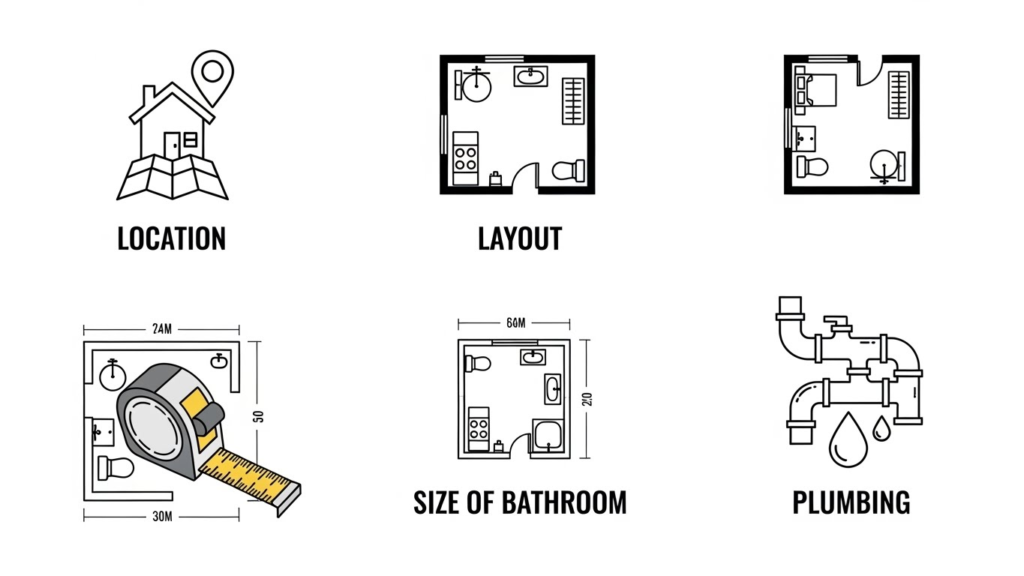
Why does one bathroom cost $10,000 while another costs $60,000? Several key factors drive the price variance. Understanding these variables helps you budget more accurately.
1. Location and Layout
Where you put the bathroom matters more than almost anything else. If you place the new bathroom close to existing plumbing lines—such as directly above or below another bathroom—you can save thousands on labor and materials.
Conversely, adding a bathroom in a remote corner of the house, far from the main sewer line and water supply, requires extensive plumbing work. This increases the complexity and the cost significantly.
2. Type of Addition
Are you working within the existing walls of your home, or are you bumping out the exterior walls?
- Interior Conversion: Repurposing a closet, bedroom corner, or basement area is the most cost-effective method. You save on foundation work, roofing, and siding.
- New Addition (Bump-out): Building a new structure attached to your house involves pouring a foundation, framing new walls, adding roofing, and matching exterior siding. This is the most expensive route but offers the most design freedom.
3. Size of the Bathroom
It’s simple math: bigger bathrooms require more materials. A spacious 100-square-foot primary bath will cost significantly more to tile, paint, and furnish than a compact 25-square-foot powder room.
4. Plumbing and Electrical Complexity
Rough-in plumbing and electrical work are major components of bathroom remodeling costs. If you need to trench through a concrete slab in the basement or upgrade your electrical panel to handle a heated floor system, expect your labor costs to rise.
5. Material Quality and Finishes
This is the “wild card” of budgeting. You can tile a floor for $3 per square foot or $30 per square foot. A vanity can cost $200 at a big-box store or $3,000 for a custom piece. Your taste in fixtures, tiles, lighting, and cabinetry will directly impact the bottom line.
Cost Breakdown by Bathroom Type
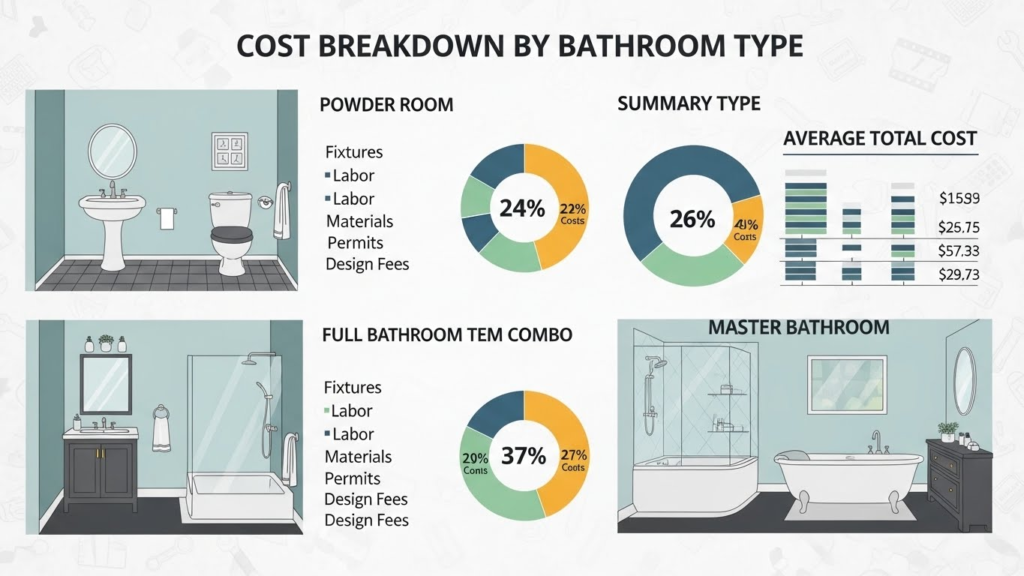
Not all bathrooms serve the same purpose, and they certainly don’t cost the same to build. Here is a detailed look at what you might pay for different types of setups.
Half Bath (Powder Room)
A half bath typically contains just a toilet and a sink. It is perfect for guests and usually fits into small spaces like under stairs or large closets.
- Estimated Cost: $5,000 – $15,000
- Key Expense: Plumbing is the main cost here. Since the space is small, material costs for flooring and paint remain low.
- Best For: Increasing home value and guest convenience on the main floor.
Three-Quarter Bath
This setup includes a toilet, sink, and a shower (standing shower stall, no tub). It is an ideal addition for a basement guest suite or a teen’s bedroom.
- Estimated Cost: $10,000 – $25,000
- Key Expense: Tiling the shower and installing glass doors adds to the material and labor budget.
- Best For: Maximizing utility in smaller spaces where a tub isn’t necessary.
Full Bathroom
The standard family bathroom includes a toilet, sink, and a tub/shower combination.
- Estimated Cost: $15,000 – $40,000
- Key Expense: Bathtub installation and extensive waterproofing for tub surrounds increase the price.
- Best For: Families with children or homes with only one existing full bath.
Primary Bathroom Suite
This is a luxury addition attached to the main bedroom, often featuring dual vanities, a separate soaking tub, a large walk-in shower, and high-end finishes.
- Estimated Cost: $40,000 – $100,000+
- Key Expense: Everything is scaled up. Custom cabinetry, stone countertops, and premium fixtures drive the price.
- Best For: Creating a private retreat and significantly boosting resale appeal.
Labor vs. Materials: Where Does the Money Go?
When you look at a quote from a contractor, it can be shocking to see the final number. Breaking down bathroom installation expenses into labor and materials helps clarify where your money is going.
Generally, the cost split for a bathroom addition is roughly 50-60% for labor and 40-50% for materials.
Labor Expenses
Skilled labor is not cheap, but it is necessary for a safe and durable bathroom. You will likely need:
- Plumbers ($45 – $200/hour): For running water lines, installing drains, and setting fixtures.
- Electricians ($50 – $130/hour): For lighting, outlets, exhaust fans, and floor heating.
- Carpenters ($30 – $100/hour): For framing walls, installing subfloors, and hanging doors.
- Tile Setters ($40 – $150/hour): For precision waterproofing and tile installation.
- Drywallers and Painters: To finish the walls and ceiling.
Material Expenses
These are the tangible items you purchase.
- Fixtures: Toilet, sink, tub, shower faucet.
- Finishes: Tile, flooring, paint, trim.
- Cabinetry: Vanity, linen storage, medicine cabinet.
- Rough Materials: Lumber, piping, wiring, drywall, concrete.
Hidden Costs You Might Overlook
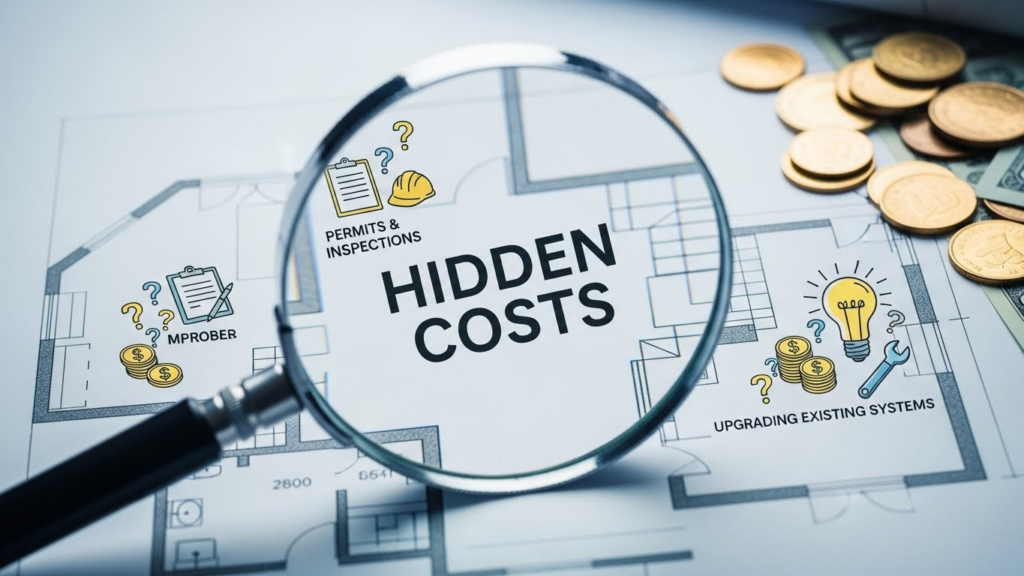
Even the most detailed budget can be derailed by hidden costs. When calculating the cost to add a bathroom, keep a contingency fund of at least 15-20% for these potential surprises.
Permits and Inspections
You cannot legally add a bathroom without permits. Local building departments charge fees for reviewing plans and conducting inspections. Depending on where you live, permits can range from $400 to $2,000.
Upgrading Existing Systems
Adding a bathroom puts extra load on your home’s infrastructure. You might discover that:
- Your water heater isn’t large enough to handle an extra shower.
- Your electrical panel is maxed out and needs an upgrade.
- Your sewer line is too small or old to support increased waste flow.
Structural Reinforcement
If you are adding a heavy cast-iron tub or extensive stone tiling to a second-story bathroom, your floor joists may need reinforcement to handle the weight. This requires structural engineering and additional carpentry.
Mold and Water Damage
If you are opening up walls in an older home to run pipes, you might find existing water damage, rot, or mold that must be remediated before new work can begin.
The Benefits of Adding a Bathroom
Is the expense worth it? For most homeowners, the answer is a resounding yes. Beyond the immediate relief of having an extra toilet, there are tangible long-term benefits.
Increased Home Value
A bathroom addition offers one of the highest returns on investment (ROI) of any home improvement project. According to real estate data, adding a bathroom can boost your home’s value by 10-20%. While you likely won’t recoup 100% of the cost instantly, you will recover a significant portion—typically 50% to 60%—when you sell.
Improved Functionality and Privacy
Nothing causes household friction like fighting over bathroom time. An additional bathroom streamlines morning routines and provides privacy for guests. A dedicated primary bath offers parents a sanctuary away from the chaos of family life.
Enhanced Marketability
When it comes time to sell, the number of bathrooms is a primary search filter for buyers. A home with 3 bedrooms and 2 baths is vastly more desirable—and easier to sell—than a 3-bedroom, 1-bath home. In a competitive market, that extra bathroom can be the deciding factor.
Adding a Bathroom to Specific Areas
The complexity of your bathroom remodeling project depends heavily on where you plan to build it. Let’s look at the unique challenges and costs associated with different locations.
The Basement Bathroom
Adding a bathroom to a basement is a popular choice because the space is usually unfinished and available. However, it presents a major plumbing challenge: getting waste up to the sewer line.
- Challenge: If your main sewer line is above the basement floor level, you will need to install a sewage ejector pump or up-flush toilet system.
- Cost Impact: Concrete cutting (trenching) to lay pipes under the slab is labor-intensive and messy.
- Price Range: $10,000 – $25,000
The Attic Bathroom
Converting an attic space into a bathroom creates a lovely private suite, but sloped ceilings can make layout tricky.
- Challenge: Ensuring there is enough headroom for a shower and meeting building codes for ceiling height. You may also need to reinforce floor joists to support the weight of a tub.
- Cost Impact: Running plumbing pipes up through two stories of the house can be expensive.
- Price Range: $15,000 – $35,000
The Bedroom Closet Conversion
Sacrificing a large walk-in closet or a portion of a large bedroom is often the cheapest way to add an ensuite.
- Challenge: Ventilation. Since closets rarely have windows, you must install a high-quality exhaust fan vented to the exterior.
- Cost Impact: Minimal structural work is required since the walls and floor are already there.
- Price Range: $5,000 – $15,000
The Garage Bathroom
This is great for households with messy hobbies or for creating a guest suite above a garage.
- Challenge: Insulation. Garages are often colder than the rest of the house, so pipes are at risk of freezing. You will need extensive insulation and possibly a dedicated heat source.
- Cost Impact: Trenching through the concrete slab and insulating walls adds to the bill.
- Price Range: $10,000 – $25,000
Money-Saving Tips for Your Bathroom Addition
If the numbers are starting to scare you, take a deep breath. There are smart ways to reduce your bathroom addition cost without ending up with a cheap-looking result.
1. Keep the Plumbing Simple
This is the golden rule of bathroom budgeting. If possible, locate the new bathroom directly adjacent to or above/below an existing kitchen or bathroom. Sharing a “wet wall” means plumbers can tie into existing supply and waste lines without running long, expensive new pipes through your house.
2. Choose Standard Sizes
Custom glass shower doors and bespoke vanities are beautiful, but they drain budgets fast. Opting for standard-sized tubs, shower pans, and vanities allows you to buy off-the-shelf products at a fraction of the cost.
3. Consider an Up-flush Toilet
If you are adding a basement bathroom and want to avoid expensive concrete trenching, consider a macerating (up-flush) toilet system like Saniflo. These units pump waste up to the main line through small-diameter pipes that can be installed behind walls without breaking the floor.
4. DIY the Finishes
While you should never DIY the plumbing or electrical work unless you are licensed, you can save money on labor by doing the finishing work yourself. Painting, installing the vanity mirror, mounting towel bars, and even laying vinyl plank flooring are manageable tasks for handy homeowners.
5. Shop Sales and Overstock
You don’t need to pay full retail price. Look for “open box” deals, visit Habitat for Humanity ReStores, or check the clearance sections of tile suppliers. You can often find high-end faucets or leftover lots of designer tile for pennies on the dollar.
6. Limit the Tile
Tile is expensive to buy and expensive to install. Instead of tiling the entire room floor-to-ceiling, limit tile to the “wet areas” (the shower and floor). Use high-quality moisture-resistant paint or wainscoting for the rest of the walls.
Hiring the Right Professional

Unless you have professional construction experience, adding a bathroom is not a DIY job. It involves complex systems that can cause catastrophic water damage or fire hazards if installed incorrectly. Hiring the right team is crucial.
General Contractor vs. Subcontractors
You have two main options:
- Hire a General Contractor (GC): They manage the entire project, hire the plumber, electrician, and tiler, pull permits, and schedule inspections. They charge a markup (usually 15-20%) for this service, but they save you immense stress and time.
- Act as Your Own GC: You hire and schedule the individual tradespeople yourself. This saves you the management fee but requires you to be available to coordinate schedules and solve problems daily.
Questions to Ask Potential Contractors
- “Have you completed bathroom additions similar to this one recently?”
- “Can you provide references from past clients?”
- “Are you licensed and insured?”
- “Will you handle the permitting process?”
- “What is your estimated timeline for completion?”
- “How do you handle change orders or unexpected costs?”
Always get at least three written estimates before making a decision. Do not automatically choose the lowest bid; look for the contractor who offers the most detailed scope of work and communicates clearly.
Timeline: How Long Does It Take?
Patience is a virtue during a bathroom remodeling project. Unlike a simple cosmetic refresh, an addition involves rough construction, inspections, and finishing.
- Design and Permitting: 2 – 4 weeks. Before a hammer swings, you need plans drawn and permits approved.
- Demolition and Framing: 3 – 5 days. Opening walls and building the new structure.
- Rough-in (Plumbing/Electric): 3 – 5 days. Running pipes and wires.
- Inspections: 1 – 2 weeks. Work often stops while waiting for city inspectors to approve the rough-in work.
- Insulation and Drywall: 3 – 5 days. Hanging, taping, and sanding walls.
- Flooring and Tiling: 3 – 7 days. This is meticulous work that requires drying time.
- Fixture Installation: 2 – 3 days. Setting the toilet, vanity, and lights.
- Final Touches: 1 – 2 days. Painting and accessories.
Total Time: Expect the project to take 4 to 8 weeks from start to finish, assuming materials are available and crews show up on time.
Making the Final Decision
So, how much does it cost to add a bathroom? The answer depends on your specific goals. You could spend $5,000 on a modest DIY closet conversion or $80,000 on a luxury spa addition.
The most important step is planning. Define your needs, set a realistic budget (with a contingency fund), and consult with professionals early in the process. While the upfront bathroom installation expenses can be daunting, the investment pays dividends in comfort, convenience, and resale value for years to come.
Adding a bathroom is more than just a renovation; it is an investment in your quality of life. Whether you need a simple powder room for guests or a master bath retreat for yourself, clear budgeting and smart planning will ensure your project is a success.
Frequently Asked Questions (FAQs)
Does adding a bathroom require a blueprint?
Yes, most municipalities require a scaled drawing or blueprint to issue a building permit. This ensures the layout meets code requirements for clearance distances around toilets and sinks.
Can I install a bathroom anywhere in my house?
Technically, yes. However, gravity is the limiting factor. Waste must flow downhill. If you install a bathroom below the main sewer line (like in a basement), you need a pump. If you install it far from existing stacks, venting and drainage become expensive engineering challenges.
Is a bathtub necessary for resale value?
Real estate experts generally advise having at least one bathtub in the house for families with small children. If your home already has a tub in another bathroom, installing a large walk-in shower in your new bathroom is perfectly acceptable and often preferred by modern buyers.
What is the cheapest way to add a bathroom?
The cheapest method is converting an existing walk-in closet or pantry that shares a wall with an existing bathroom. This minimizes framing, roofing, and plumbing run costs.
How much value does a half bath add compared to a full bath?
A full bath generally adds about twice as much value as a half bath. However, a half bath costs significantly less to install. If your home only has one bathroom, adding a second one (even a half bath) creates the biggest jump in value.