How Much Does a Privacy Fence Cost? A Complete Guide
Adding a privacy fence to your property is a significant investment that enhances security, boosts curb appeal, and creates a secluded outdoor oasis. Before breaking ground, it’s essential to understand the potential expenses involved. The total privacy fence cost can vary widely based on materials, labor, property size, and location. This comprehensive guide will walk you through every factor influencing the price, helping you budget effectively for your project.
On average, homeowners can expect to pay between $15 and $50 per linear foot for a professionally installed privacy fence. This means a typical 150-linear-foot project could range from $2,250 to $7,500 or more. We’ll explore the detailed cost breakdowns for different materials, examine the factors that drive prices up or down, and provide tips for saving money on your fence installation.
Understanding Privacy Fence Pricing

When you receive a quote for a new fence, the price is usually presented per linear foot. This measurement simplifies the estimation process and allows for easy comparison between different materials and contractors. The “per linear foot” price typically includes both materials and the cost of labor for installation.
National Average Cost of a Privacy Fence
While prices fluctuate, the national average cost to install a privacy fence is around $4,500. Most homeowners spend between $2,500 and $8,000 for a full installation. However, a small DIY project could cost as little as $1,000, while a high-end fence made from premium materials on a large property could exceed $15,000. Understanding what goes into these numbers is the first step toward creating an accurate budget.
Cost of Privacy Fence Per Foot
The price per linear foot is the most critical metric for estimating your total project cost. This figure is influenced primarily by your choice of fencing material. For a standard 6-foot tall privacy fence, here are the average costs you can expect:
- Wood: $15 to $35 per linear foot
- Vinyl (PVC): $20 to $40 per linear foot
- Aluminum: $30 to $60 per linear foot
- Composite: $25 to $55 per linear foot
- Chain Link (with privacy slats): $10 to $30 per linear foot
To get a rough estimate for your project, measure the perimeter of the area you want to fence (in feet) and multiply it by the per-foot cost of your desired material.
Privacy Fence Cost Breakdown by Material
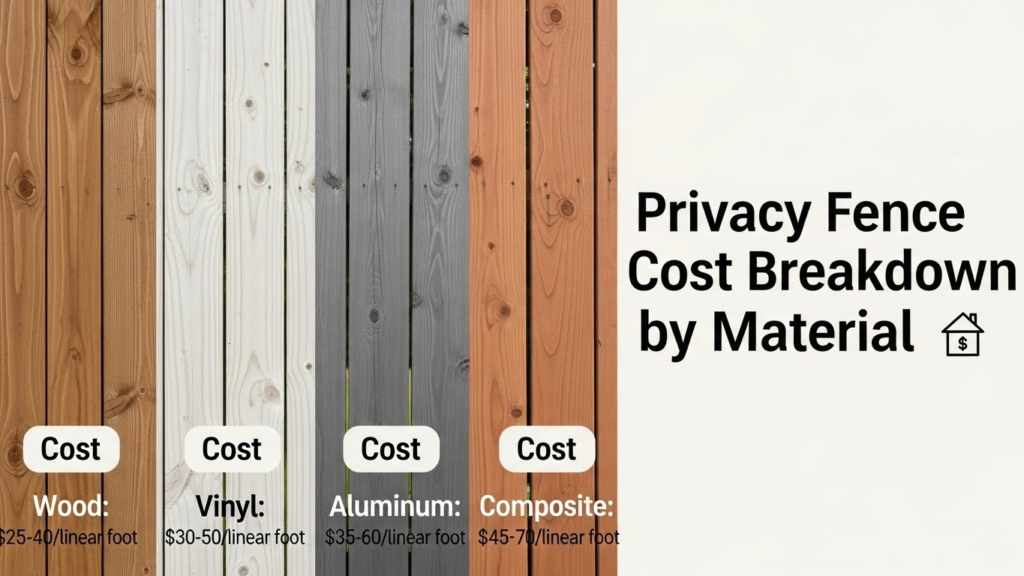
The material you choose is the single largest factor determining the final cost of your privacy fence. Each option offers a unique blend of durability, maintenance requirements, and aesthetic appeal.
Wood Privacy Fence Cost
Wood is the classic choice for privacy fences, favored for its natural beauty and relatively affordable price. The cost of a wood fence depends heavily on the type of wood selected.
- Pressure-Treated Pine: This is the most budget-friendly option, typically costing $15 to $25 per linear foot installed. It is chemically treated to resist rot and insects but requires regular staining or sealing to maintain its appearance and longevity.
- Cedar: A popular mid-range choice, cedar is naturally resistant to decay and insects. It has a beautiful reddish hue and costs between $20 and $35 per linear foot.
- Redwood: As a premium wood, redwood offers superior durability and a striking appearance. It is also the most expensive, with costs ranging from $25 to $40 per linear foot.
Wood fences offer excellent privacy and a traditional look but demand the most maintenance. You will need to clean, stain, and seal the wood every few years to prevent weathering and rot, which adds to the long-term cost of ownership.
Vinyl Privacy Fence Cost
Vinyl, or PVC, fencing has become a popular low-maintenance alternative to wood. It won’t rot, warp, or splinter, and it never needs painting or staining. A simple wash with soap and water is all that’s required to keep it looking new.
The average cost for a vinyl privacy fence is $20 to $40 per linear foot installed. While the upfront privacy fence cost is higher than for most wood options, the savings on maintenance can make it a more cost-effective choice over the long term. Vinyl fences are available in various colors and styles, including some that mimic the look of wood grain.
Aluminum Privacy Fence Cost
Aluminum fences are prized for their strength, durability, and modern aesthetic. They are rust-proof and require virtually no maintenance. While traditional aluminum fences with spaced pickets are not designed for privacy, you can order them with solid panels or add privacy screens.
An aluminum privacy fence is a high-end option, with prices generally ranging from $30 to $60 per linear foot installed. The higher initial investment provides a long-lasting and resilient barrier that can withstand harsh weather conditions without deteriorating.
Composite Privacy Fence Cost
Composite fencing combines recycled wood fibers and plastic to create a durable, low-maintenance material. It offers the look of wood without the susceptibility to rot, insects, or weathering. Like vinyl, composite fencing never needs to be stained or painted.
The cost of a composite privacy fence is between $25 and $55 per linear foot. This material is heavier than vinyl and can be more difficult to install, which contributes to its higher price point. However, its longevity and minimal upkeep make it an attractive option for homeowners seeking a balance between aesthetics and practicality.
Chain Link Fence with Privacy Slats Cost
A standard chain link fence is one of the most affordable fencing options, but it offers no privacy. To turn it into a privacy fence, you can add vinyl slats that are woven through the mesh. This approach provides a functional and budget-friendly solution.
The total cost for a chain link fence with privacy slats typically falls between $10 and $30 per linear foot. The price depends on the height of the fence and the quality of the slats. While it may not offer the same visual appeal as wood or vinyl, it is a durable and cost-effective way to secure your yard.
Cost Comparison Table (6-Foot Fence, Per Linear Foot Installed)
| Material | Average Cost Range | Key Features |
|---|---|---|
| Wood (Pressure-Treated) | $15 – $25 | Affordable, natural look, requires high maintenance |
| Wood (Cedar) | $20 – $35 | Natural rot resistance, attractive, needs maintenance |
| Vinyl (PVC) | $20 – $40 | Low maintenance, durable, multiple styles |
| Composite | $25 – $55 | Wood-like appearance, very durable, low maintenance |
| Aluminum | $30 – $60 | Premium, rust-proof, modern, minimal maintenance |
| Chain Link (with Slats) | $10 – $30 | Most affordable, durable, functional privacy |
Key Factors That Affect Fence Installation Cost
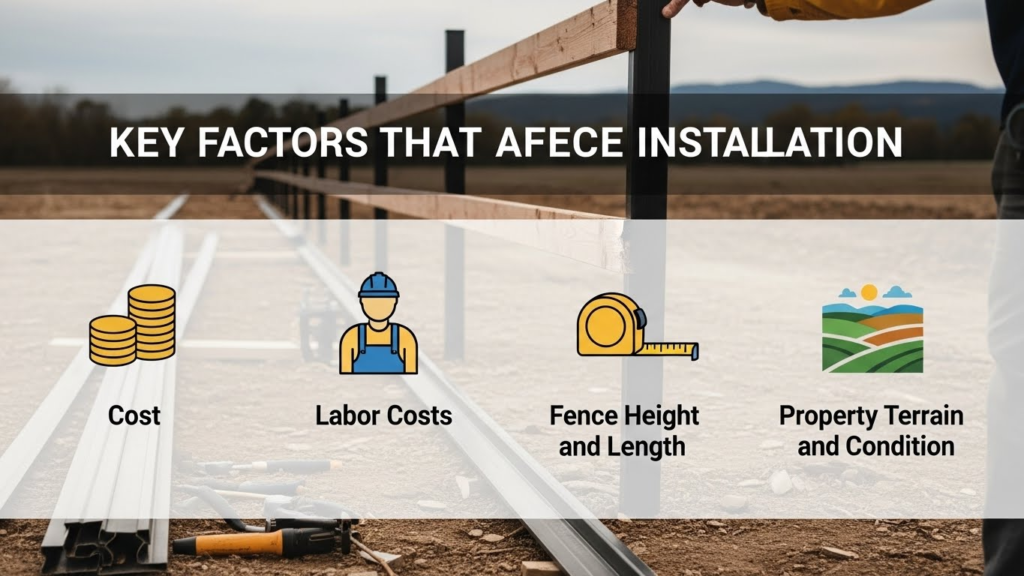
Beyond the material, several other variables can influence the final price of your privacy fence project. Understanding these factors will help you anticipate the full scope of your fence installation cost.
1. Labor Costs
For a professional installation, labor typically accounts for 30% to 50% of the total project cost. Fence installation labor costs range from $7 to $20 per linear foot, depending on the complexity of the job, the type of material being installed, and regional wage rates. For example, a heavy composite fence is more difficult to handle than lightweight vinyl, leading to higher labor charges.
2. Fence Height and Length
The dimensions of your fence are direct cost drivers. Taller fences require more material and often need more robust posts and deeper footings, increasing both material and labor costs. A standard 6-foot privacy fence is the most common, but an 8-foot fence can cost 25-35% more per linear foot. Similarly, the longer the fence, the higher the overall cost will be, though the price per foot may decrease slightly on very large projects.
3. Property Terrain and Condition
The landscape of your property plays a significant role in the installation process.
- Slopes: Installing a fence on sloped or hilly terrain is more complex and time-consuming. Contractors must use techniques like stepping or racking the panels, which requires more labor and drives up the cost.
- Soil Condition: Rocky or hard-packed clay soil can make digging post holes difficult, sometimes requiring special equipment like an auger. This extra effort translates to higher labor costs.
- Obstacles: The presence of trees, roots, or underground utility lines can complicate the installation. Clearing the fence line before the crew arrives can help minimize these additional costs.
4. Gates
Every fence needs at least one gate for access. The cost of a gate is typically higher than the cost of a standard fence panel due to the need for extra hardware (hinges, latches) and reinforcement. A basic walk-through gate might add $200 to $500 to your project cost, while a wider double gate or an automatic gate could add $600 to $5,000 or more.
5. Old Fence Removal
If you are replacing an existing fence, the old one must be removed and disposed of. Most fencing contractors offer this service for an additional fee, typically $3 to $7 per linear foot. This price covers the labor to tear down the old fence and the cost of hauling it away.
6. Permits and Surveys
In many municipalities, a building permit is required to erect a new fence. Permit fees can range from $50 to $400, depending on your location. It’s also a good idea to have a professional land survey done to ensure your fence is placed correctly on your property line, avoiding disputes with neighbors. A survey can cost between $300 and $700.
DIY vs. Professional Fence Installation Cost
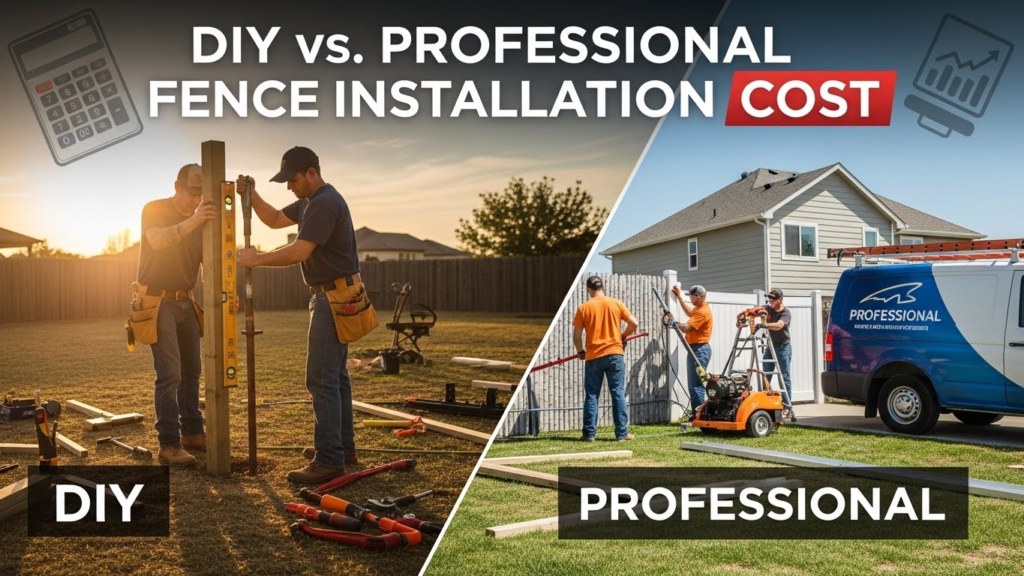
To save on labor expenses, you might consider installing the fence yourself. A DIY installation can reduce the total privacy fence cost by 30-50%. However, this is a labor-intensive project that requires careful planning, the right tools, and a fair amount of physical effort.
DIY Costs
When you go the DIY route, your primary costs are materials and tool rentals.
- Materials: You will purchase fence panels, posts, concrete, and fasteners directly from a home improvement store.
- Tools: You may need to rent equipment like a post-hole digger (manual or gas-powered auger), a level, a saw, and a nail gun. Tool rentals can cost $50 to $150 per day.
While you save on labor, mistakes can be costly. Improperly set posts, misaligned panels, or an uneven fence line can detract from your home’s value and may require professional intervention to fix. A DIY project is best suited for those with construction experience, working on flat terrain with a straightforward fence line.
Professional Installation Costs
Hiring a professional ensures the job is done correctly and efficiently. A professional contractor has the experience to handle challenges like slopes and difficult soil. They also have the necessary tools and a crew to complete the job much faster than a single person could. The added cost of labor buys you peace of mind, a warranty on the workmanship, and a high-quality finished product.
Tips for Saving Money on Your Privacy Fence
A new fence is a major expense, but there are ways to manage the cost without sacrificing quality.
- Choose a Cost-Effective Material: Pressure-treated pine is a great budget-friendly option if you are willing to perform regular maintenance. A chain link fence with privacy slats is another highly affordable choice.
- Share the Cost with a Neighbor: If you and your neighbor both want a fence along your shared property line, you can split the cost. This can cut your expenses for that section of the fence in half. Be sure to get a written agreement beforehand.
- Handle Some of the Labor Yourself: Even if you hire a professional for the main installation, you can save money by doing some of the prep work. This includes clearing the fence line of brush, rocks, and other obstacles, as well as tearing down and disposing of an old fence if you are able.
- Install in Phases: If your budget is tight, consider fencing your property in sections. You could start by fencing the most critical areas for privacy, such as the portion of your yard facing the street or a neighbor’s house, and complete the rest later.
- Get Multiple Quotes: Always obtain at least three detailed quotes from reputable local contractors. This allows you to compare prices and services to ensure you are getting a fair deal. Be wary of any quote that is significantly lower than the others, as it may indicate subpar materials or inexperienced labor.
Planning Your Privacy Fence Project
A successful fence project begins with careful planning. Before you start contacting contractors, take the following steps:
- Check Local Regulations: Contact your local building department and homeowners’ association (HOA) to learn about any rules regarding fence height, style, materials, and placement.
- Define Your Goals: Determine the primary purpose of your fence. Is it purely for privacy, to contain pets, for security, or to block noise? Your goals will influence your choice of material and height.
- Measure Your Property: Use a long measuring tape to determine the total linear footage you need to fence. This number is crucial for estimating your total privacy fence cost.
- Set a Realistic Budget: Using the cost information in this guide, create a budget that includes materials, labor, permits, and a contingency fund (usually 10-15%) for unexpected expenses.
By understanding the average cost of a privacy fence and the factors that influence it, you can make an informed decision that adds value, beauty, and security to your home. Whether you opt for the natural charm of wood or the low-maintenance convenience of vinyl, a well-planned fence is an investment you’ll appreciate for years to come.