
How Much Does a Garage Cost? The Complete 2026 Price Guide
You park in the driveway, dodge rainstorms while carrying groceries, and scrape ice off your windshield every winter morning. Eventually, you ask yourself: isn’t it time I built a garage? Adding a garage is one of the most practical home improvements you can make. It offers protection for your vehicles, extra storage for your clutter, and potentially a significant boost to your property value. But before you start pouring concrete, there is one burning question every homeowner has.
How much does a garage cost?
The answer isn’t a single number, but rather a range influenced by size, materials, and location. Understanding these variables is crucial to planning a project that fits your budget. This guide will walk you through a comprehensive garage price breakdown, helping you understand where your money goes and how to manage your garage building expenses effectively.
Average Cost to Build a Garage in 2026
When asking “how much does a garage cost,” most homeowners are looking for a baseline. In 2026, the national average cost to build a standard garage typically ranges between $25,000 and $60,000. However, a simple, prefab single-car kit might cost as little as $10,000, while a luxury, custom detached three-car garage with an apartment overhead could easily surpass $100,000.
Generally, you can expect to pay between $40 and $70 per square foot for standard construction. This per-square-foot cost includes materials and labor but can fluctuate based on the quality of finishes you choose. If you opt for high-end features like brick siding, slate roofing, or finished interiors with HVAC, that price can jump to $80 or even $100 per square foot.
The “Rule of Thumb” for Garage Pricing
A helpful way to estimate your initial budget is to look at the project as a whole construction job, not just a simple shed. You are essentially building a small house without a kitchen or bathroom. It requires a foundation, framing, roofing, siding, and electricity. Therefore, the garage construction cost usually aligns with general residential construction trends in your area.
Breakdown by Garage Size and Capacity
The most significant factor in your garage price breakdown is size. Naturally, a larger footprint requires more concrete, more lumber, and more labor. Here is what you can expect to pay based on vehicle capacity.
1-Car Garage Costs
A single-car garage typically measures around 12×20 feet or 14×24 feet (approx. 240 to 336 square feet). This is the most budget-friendly option, ideal for tight lots or homeowners who only need to protect one vehicle and store a lawnmower.
- Average Range: $15,000 – $30,000
- Best For: Small lots, budget-conscious builds, attached additions.
2-Car Garage Costs
The two-car garage is the standard for modern American homes. Usually measuring 20×20 feet or 24×24 feet (approx. 400 to 576 square feet), this size allows for two vehicles or one vehicle plus a workshop area. Because you are doubling the width but sharing walls and roofing structure, the cost per square foot often drops slightly compared to a 1-car unit, even though the total price is higher.
- Average Range: $25,000 – $55,000
- Best For: Families, homeowners needing workshop space, maximizing resale value.
3-Car Garage Costs
For car enthusiasts, large families, or those with recreational vehicles like boats or ATVs, a three-car garage is often necessary. These structures are substantial, often exceeding 800 square feet.
- Average Range: $45,000 – $80,000+
- Best For: Luxury homes, multi-car households, extensive storage needs.
Attached vs. Detached: Which is Cheaper?

When calculating the cost to build a garage, the connection to your existing home plays a massive role.
The Cost of Attached Garages
An attached garage shares at least one wall with the main house. Because one wall is already built and you can often tie into the existing HVAC and electrical systems more easily, attached garages are generally cheaper to build.
- Price Advantage: You save on framing and siding for the shared wall.
- Convenience: Direct access to the house is a major lifestyle perk.
- Estimated Savings: An attached garage often costs 10% to 15% less than a comparable detached unit.
However, keep in mind that cutting into your home’s existing structure to add a door can sometimes reveal hidden problems or require expensive structural headers, which might eat into your savings.
The Cost of Detached Garages
A detached garage is a standalone structure. It offers more design flexibility since you aren’t limited by the existing rooflines or layout of your house. It keeps noise, fumes, and hazardous materials (like paint or gasoline) away from your living space.
- Price Premium: You are building four full walls and a completely separate foundation system. You may also need to run long utility trenches from the street or house.
- Design Freedom: Easier to add a second story or place the garage elsewhere on the property.
- Estimated Cost: Expect to pay $5,000 to $15,000 more for a detached unit compared to an attached one.
Prefab vs. Custom-Built Garages
Another major fork in the road for your budget is the choice between a prefabricated kit and a custom stick-built structure.
Prefabricated Garage Kits
Prefab kits are manufactured off-site and shipped to your home in sections. They are designed for quick assembly, sometimes even by experienced DIYers.
- Pros: Lower material costs, faster construction time, predictable pricing.
- Cons: Limited design options, potentially lower durability, you still have to pay for the foundation separately.
- Cost Impact: Metal prefab kits can cost as little as $5,000 to $15,000 for materials. Wood prefab kits are pricier but still cheaper than custom builds.
Custom Stick-Built Garages
This is the traditional method where contractors build the garage on-site from lumber.
- Pros: Matches your home’s aesthetic perfectly, unlimited design options, higher resale value, durable construction.
- Cons: Higher labor costs, longer construction timeline, weather delays.
- Cost Impact: This is where the standard $40-$70 per square foot range applies. Custom builds command the highest prices but offer the best long-term value.
Detailed Garage Construction Cost Breakdown
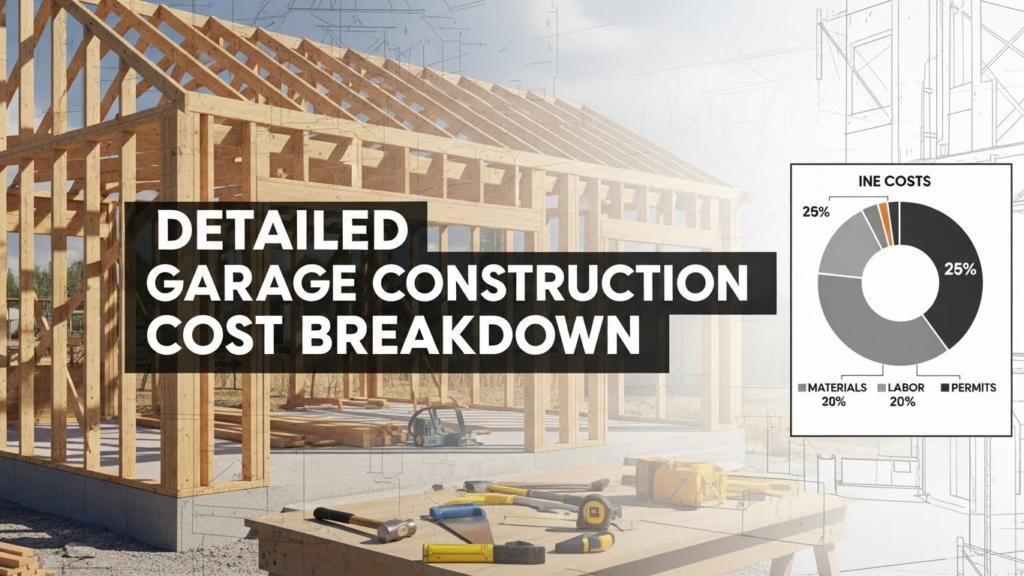
To truly understand how much a garage costs, you need to look at the line items. Here is where every dollar goes during the build.
1. Foundation and Site Prep (15-20% of budget)
You cannot build on dirt. The foundation is critical for the longevity of the structure.
- Excavation and Grading: The land must be leveled. If your lot is sloped, excavation costs can skyrocket.
- Concrete Slab: A monolithic slab is the most common foundation. It combines the footing and the floor. Expect to pay $5 to $10 per square foot for concrete work.
- Stem Walls: In colder climates where frost heave is a concern, you may need deep footings and stem walls, which are more expensive than a simple floating slab.
2. Framing and Insulation (20-25% of budget)
This is the skeleton of your garage. Lumber prices fluctuate wildly, which can swing your quote significantly from month to month.
- Lumber: The cost of wood for walls and roof trusses.
- Roof Trusses: Prefabricated trusses are usually cheaper and stronger than hand-framing a roof.
- Insulation: If you plan to heat the garage or use it as a workshop, insulation is mandatory. Fiberglass batts are affordable, while spray foam offers superior performance at a higher price.
3. Exterior Finishes: Siding and Roofing (15-20% of budget)
To maximize curb appeal, your garage should match your house.
- Siding: Vinyl siding is the most affordable option ($3-$7 per sq. ft.). Wood, fiber cement (Hardie board), and brick veneer are premium options that will significantly increase your garage building expenses.
- Roofing: Asphalt shingles are standard and cost-effective. Metal roofing lasts longer but costs more upfront. If your home has a slate or tile roof, matching it on the garage will be a major expense.
4. Windows, Doors, and Garage Doors (10-15% of budget)
Don’t underestimate the cost of the big door.
- Garage Doors: A standard steel uninsulated door might cost $800. A high-end, insulated wood-look carriage door with smart openers can easily cost $3,000 to $5,000 per door.
- Entry Doors: You need at least one standard walk-through door for safety and convenience.
- Windows: Adding natural light makes the space more usable but adds to material and flashing costs.
5. Electrical, Plumbing, and HVAC (10-15% of budget)
A basic garage needs lights and a few outlets. A dream workshop needs much more.
- Electrical: A basic package includes a few overhead lights and outlets. Upgrading to a 220V outlet for EV charging or heavy tools adds to the cost.
- Plumbing: Adding a utility sink or a half-bath requires trenching for water and sewer lines, which is a major expense for detached garages.
- HVAC: A mini-split system is the most efficient way to heat and cool a garage, costing between $2,000 and $5,000 installed.
Factors That Influence Garage Prices
Beyond the physical materials, several invisible factors influence your final bill.
Location and Labor Rates
Construction costs are intensely local. Building a garage in rural Ohio will cost significantly less than building the exact same structure in downtown San Francisco or the suburbs of New York City.
- Labor Rates: In high-cost-of-living areas, skilled tradespeople command higher hourly wages.
- Seasonality: Building in the off-season (late fall or early spring) might yield lower labor quotes, though weather delays can offset savings.
Design Complexity
A simple rectangular box with a gable roof is the cheapest shape to build.
- Roof Pitch: Steep roofs are harder to walk on and require more safety gear and labor, increasing roofing costs.
- Layout: Corners add cost. An L-shaped garage is more expensive to frame and finish than a square one.
- Second Stories: Adding a loft or apartment above the garage basically doubles the complexity. You need a stronger foundation, sturdier framing, stairs, and typically full utility connections.
Finishing Touches
The level of finish inside the garage changes the price tag.
- Unfinished: Open studs and exposed concrete floors. Lowest cost.
- Semi-Finished: Drywall is hung and taped (fire code often requires this on shared walls), but not painted.
- Finished: Painted walls, epoxy floor coating, trim, and cabinetry. This turns a parking spot into a showroom, adding thousands to the final tally.
Hidden Costs You Might Overlook

When you ask a contractor “how much does a garage cost,” the initial quote might not cover everything. Beware of these hidden line items that can blow your budget.
1. Permits and Impact Fees
Before you dig, you need permission. Building permits ensure your structure is safe and up to code.
- Cost: $500 to $2,000 depending on your municipality.
- Impact Fees: Some cities charge fees to offset the strain on local infrastructure.
2. Driveway Extension
If you build a detached garage in the backyard, how will you get your car to it? You may need to pour a new concrete or asphalt driveway extension.
- Cost: Concrete driveways cost $6-$12 per square foot. A long driveway can cost as much as the garage itself.
3. Site Preparation and Demolition
If there is an old shed, a rotting carport, or a large tree where your new garage needs to go, you have to pay to remove it.
- Cost: Tree removal can cost $500-$1,500 per tree. Demolition of an old structure can run $1,000-$3,000.
4. Design and Architecture Fees
For custom garages, you may need an architect or a structural engineer to draw up plans that satisfy the city planning department.
- Cost: $1,000 to $3,000 for professional blueprints.
Does a Garage Add Value to Your Home?
Spending $40,000 on a garage is a lot of money. Will you see it again? Generally, yes.
A garage is high on the wish list for homebuyers, especially in regions with harsh weather. While you likely won’t get a 100% dollar-for-dollar return on investment (ROI), the typical ROI for a garage addition hovers around 65% to 80%.
However, the real value is often in marketability. In many suburban neighborhoods, a home without a garage sits on the market significantly longer than one with a garage. If every other house on your block has a two-car garage and yours does not, your property value suffers disproportionately.
Attached vs. Detached Value:
Attached garages tend to have a slightly higher ROI because buyers prefer the convenience of entering the home directly. However, detached garages with finished accessory dwelling units (ADUs) above them are becoming incredibly valuable for rental income potential.
How to Budget and Save on Garage Building Expenses
If the numbers above are making you sweat, don’t worry. There are ways to control your garage price breakdown without sacrificing quality.
1. Keep the Design Simple
Stick to standard dimensions (20×20, 24×24). Using standard lumber lengths reduces waste and labor time. Avoid complex rooflines or unnecessary corners.
2. Choose Standard Materials
Vinyl siding is durable and cheap. Asphalt shingles are reliable and affordable. Save the stone veneer and slate roof for your dream house.
3. Do Some DIY
While pouring a foundation and framing a roof are jobs for pros, you can tackle other tasks.
- Painting: Paint the exterior and interior yourself.
- Landscaping: Handle the final grading and planting around the garage.
- Organization: Install shelves and cabinets yourself after the build is done.
4. Get Multiple Quotes
Never settle for the first price. Solicit bids from at least three licensed contractors. Compare not just the bottom line, but what is included. One quote might be higher but includes the driveway and permits, while the “cheaper” quote leaves those for you to manage.
5. Consider the Off-Season
Contact builders in late winter. They may be looking to fill their schedule for early spring and might offer more competitive pricing than they would in the peak of summer.
6. Plan for the Future
It is cheaper to run a conduit for future electrical needs now while the walls are open than to rip out drywall later. Even if you can’t afford an EV charger today, spending $100 on the wiring now saves you $1,000 later.
Conclusion
So, how much does a garage cost? For a standard two-car project in 2026, you should budget between $25,000 and $55,000, keeping in mind that location and material choices can swing this number in either direction.
While the upfront cost is significant, a well-built garage is an asset that protects your vehicles, declutters your home, and increases your property value. By understanding the garage construction cost breakdown—from the foundation to the finishing touches—you can make informed decisions that align with both your needs and your bank account.
Start by defining exactly what you need: Is it just for parking, or do you need a workshop? Once you have a vision, get multiple quotes, check references, and prepare for a project that will transform how you use your home.