
How Long Does Wiring Money Take? A Complete Guide
When you need to send money quickly and securely, a wire transfer is often a reliable choice. But one of the most pressing questions senders have is: exactly how long does wiring money take? The answer isn’t always straightforward. The duration of a wire transfer can range from a few hours to several days, depending on a variety of factors.
This guide will provide a comprehensive look at wire transfer timelines. We will explore the differences between domestic and international transfers, uncover the details that influence processing speed, and offer practical tips to help you avoid common bank transfer delays. By understanding the complete wire transfer process, you can manage your expectations and ensure your funds arrive as quickly as possible.
Understanding the Wire Transfer Process
Before diving into timelines, it’s helpful to understand what a wire transfer is. A wire transfer is an electronic transfer of funds from one person or entity to another. Unlike other electronic payments like ACH (Automated Clearing House) transfers, which are processed in batches, wire transfers are handled individually and in real-time between banks. This individual attention is what makes them faster but also typically more expensive.
The process involves several key steps:
- Initiation: The sender provides their bank with the recipient’s information, including their full name, address, bank name, account number, and routing number (or SWIFT/BIC code for international transfers).
- Verification: The sending bank verifies the sender’s identity and confirms they have sufficient funds to cover the transfer amount and any associated fees.
- Transmission: The sending bank sends a secure message through a network like Fedwire (for U.S. domestic transfers) or SWIFT (for international transfers) to the recipient’s bank.
- Reception and Crediting: The receiving bank gets the payment instructions, verifies the details, and credits the funds to the recipient’s account.
Each of these steps contributes to the overall wire transfer duration.
Domestic Wire Transfer Time: How Long Does It Take?
For transfers within the same country, the process is generally quite fast. A domestic wire transfer time is typically less than 24 hours. In many cases, if you initiate the transfer early on a business day, the recipient could see the funds in their account on the same day.
The Fedwire System and Same-Day Processing
In the United States, most domestic wire transfers are processed through the Federal Reserve’s Fedwire Funds Service. This system operates in real-time, allowing for the immediate settlement of payments between member financial institutions.
Because Fedwire facilitates instant clearing, the primary factor determining a domestic wire transfer time is the internal processing speed of the sending and receiving banks. Banks have specific cutoff times for initiating wire transfers. If you submit your request before this deadline, it will likely be processed that same business day. If you miss the cutoff, your transfer will be processed on the next business day.
For example, if a bank’s cutoff time for wire transfers is 3:00 PM and you submit your request at 1:00 PM on a Tuesday, the funds will probably arrive in the recipient’s account later that afternoon. However, if you submit the request at 4:00 PM, it will be queued for processing on Wednesday morning.
International Wire Transfer Process and Duration

Sending money across borders is a more complex undertaking, which is why the international wire transfer process takes significantly longer. Generally, an international wire transfer can take anywhere from 1 to 5 business days to complete. In some cases, it might take even longer.
Why Do International Transfers Take More Time?
Several factors contribute to the extended timeline for international wire transfers:
1. The SWIFT Network
Most international transfers are facilitated through the Society for Worldwide Interbank Financial Telecommunication (SWIFT) network. SWIFT doesn’t actually transfer funds; it sends secure payment orders between institutions. The actual money moves through a series of correspondent or intermediary banks, especially if the sending and receiving banks don’t have a direct relationship. Each bank in this chain adds another step to the process, increasing the overall transfer time.
2. Correspondent Banks
Imagine sending a package from a small town in one country to a small town in another. The package might go from a local post office to a regional hub, then to an international airport, onto a plane, to another country’s hub, and finally to the local destination. Correspondent banks work similarly. If your bank in the U.S. needs to send money to a small local bank in Italy, it might first send the funds to a large intermediary bank in Europe that has a relationship with both institutions. This multi-step journey is a primary reason for longer international wire transfer durations.
3. Currency Conversion
When you send money internationally, the funds must be converted from your currency to the recipient’s local currency. This conversion process can add time. The exchange rate is determined at the time of the transaction, and the process itself can introduce a delay, particularly if it occurs at a specific point in the banking day.
4. Time Zone Differences
Global banking operations are not synchronized 24/7. A transfer initiated at the end of the business day in New York may not be processed by a bank in Sydney until the start of their next business day. This can easily add a full day to the wire transfer duration.
Key Factors That Affect Wire Transfer Times
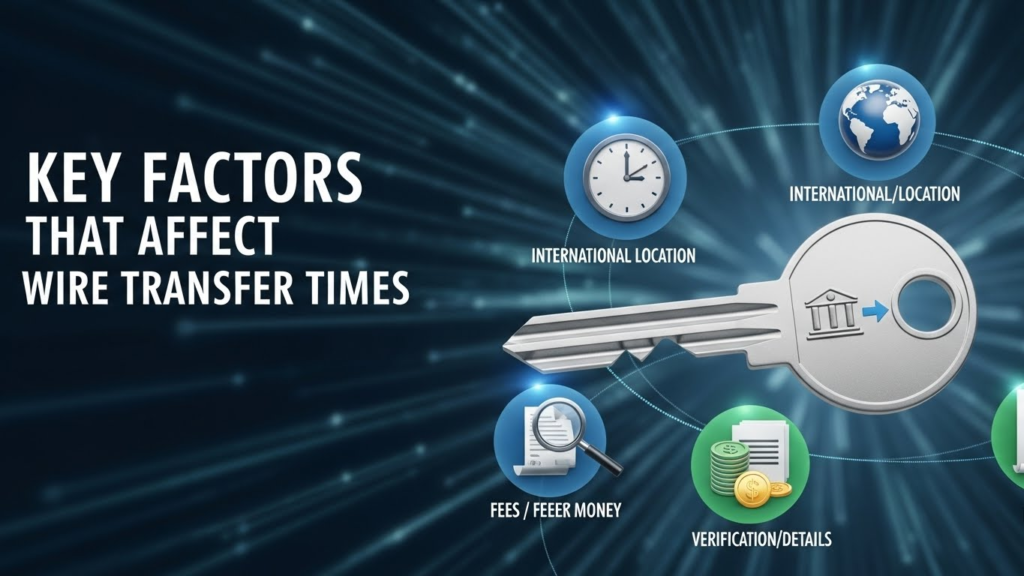
Whether domestic or international, several universal factors can impact how long it takes to wire money. Understanding these can help you avoid unnecessary bank transfer delays.
1. Accuracy of Information
This is one of the most common and preventable causes of delay. A simple typo in the recipient’s name, a wrong digit in the account number, or an incorrect routing or SWIFT code can cause a transfer to be rejected or placed on hold. When this happens, the funds are often sent back to the originating bank, and you will have to start the process all over again, likely incurring another fee.
Tip: Always double-check and even triple-check every piece of information before submitting your wire transfer request. Confirm the details directly with the recipient.
2. Bank Cutoff Times
As mentioned earlier, all banks have daily cutoff times for processing wire transfers. These times can vary significantly from one institution to another. A transfer submitted after the cutoff time will not be processed until the next business day. For international transfers, you must consider the cutoff times of both the sending bank and any intermediary banks involved.
Tip: To ensure the fastest possible transfer, initiate your wire well before your bank’s cutoff time, preferably in the morning.
3. Weekends and Bank Holidays
Wire transfers are only processed on business days. If you initiate a transfer on a Friday afternoon, it likely won’t be processed until Monday morning. This delay is extended further if Monday is a bank holiday. This applies to holidays in both the sending and receiving countries. For example, a transfer from the U.S. to Canada might be delayed if it’s Thanksgiving in the U.S. or Canada Day in Canada.
Tip: Plan your transfers around weekends and public holidays. If a payment is time-sensitive, send it early in the week to avoid getting caught by the weekend shutdown.
4. Verification and Compliance Checks
Financial institutions are required by law to monitor transactions for signs of fraud and money laundering. A large or unusual transfer may be flagged for additional review. This is not necessarily a cause for alarm; it’s a standard security procedure. However, this compliance check can add time to the transfer process, sometimes delaying it by a day or more while the bank verifies the legitimacy of the transaction. You may be contacted by your bank to provide more information about the purpose of the transfer or the source of the funds.
Tip: Be prepared to answer questions from your bank, especially for large transfers. Having documentation ready can help speed up the verification process.
5. Destination Country and Bank
The destination country plays a significant role in international wire transfer duration. Some countries have more advanced banking systems that can process incoming wires quickly. Others may have less developed financial infrastructures or stricter regulations, which can slow things down. The efficiency of the specific receiving bank also matters. Large, global banks often process transfers faster than smaller, local institutions.
How to Speed Up Your Wire Transfer

While some factors affecting wire transfer times are out of your control, there are several steps you can take to help ensure your money arrives as quickly as possible.
- Provide Flawless Information: The most critical step is to ensure all recipient details are 100% correct. An incorrect account number is the fastest way to have your transfer fail.
- Send Early in the Day and Week: Initiate your transfer on a Monday or Tuesday morning to avoid delays from cutoff times, weekends, and holidays.
- Understand Bank Requirements: Ask your bank about their specific cutoff times and processing procedures. Knowing their schedule can help you plan better.
- Gather All Necessary Details: For international transfers, ensure you have the correct SWIFT/BIC code, IBAN (International Bank Account Number) if required, and the recipient’s full legal name and address as they appear on their bank account.
- Choose a Direct Route if Possible: Some modern fintech services and banks offer more direct transfer routes that bypass some of the traditional correspondent bank systems, which can result in faster international transfers.
- Keep Your Receipt: Always keep the receipt or confirmation number for your transfer. If a delay occurs, this number is essential for tracking the transaction and initiating an inquiry.
What to Do If a Wire Transfer Is Delayed
If your wire transfer is taking longer than expected, the first step is to contact your bank. Provide them with the confirmation number and ask them to trace the transfer. The sending bank can communicate with the receiving bank (and any intermediary banks) to determine the status of the funds.
Common reasons for a “lost” or delayed transfer include:
- Incorrect recipient information that caused the transfer to be held or rejected.
- The transfer was flagged for a compliance review and is pending verification.
- The funds were received but have not yet been credited to the recipient’s account due to an internal issue at the receiving bank.
Your bank’s wire transfer department can investigate and provide an update on the situation. In most cases, delayed wires are eventually resolved, though it can be a stressful experience.
Alternatives to Traditional Wire Transfers
While wire transfers are a mainstay for moving large sums of money, several alternatives might be faster or more cost-effective for certain situations.
- ACH Transfers: These are great for non-urgent domestic payments. They usually take 1-3 business days but are often free or very low-cost.
- Online Payment Services: Companies like Wise (formerly TransferWise), Remitly, and WorldRemit specialize in international money transfers. They often offer faster transfer times and more competitive exchange rates than traditional banks because they use different networks.
- Peer-to-Peer (P2P) Payment Apps: Services like PayPal, Venmo, and Zelle are excellent for small, quick domestic transfers between individuals. Zelle, in particular, offers near-instant transfers directly between bank accounts.
- Cryptocurrency: While more volatile and complex, sending cryptocurrency can be nearly instantaneous, regardless of international borders. However, it requires both the sender and receiver to be comfortable using digital wallets.
A Final Summary of Wire Transfer Timelines
To recap, the question “how long does wiring money take?” has two primary answers:
- Domestic Wire Transfers: Typically completed in under 24 hours, often on the same business day if initiated before the bank’s cutoff time.
- International Wire Transfers: Usually take 1 to 5 business days, but can be longer due to factors like intermediary banks, currency conversion, time zones, and compliance checks.
By understanding the mechanics of the wire transfer process, providing accurate information, and planning your transfer strategically, you can minimize the risk of delays. Always communicate with your bank and confirm details with your recipient to ensure a smooth and timely transaction.