
Cost of Custom Cabinets: A Complete 2026 Price Guide
Most homeowners face a significant decision during a kitchen remodel or bathroom renovation: stick with stock options or invest in custom cabinetry. The allure of perfectly fitted storage designed specifically for your space is strong, but the first question is almost always, “How much will this actually cost?”
Understanding the true cost of custom cabinetry requires looking beyond the price tag. It involves dissecting the materials, craftsmanship, and installation intricacies that turn wood and hardware into functional art. While the upfront investment is higher than mass-produced alternatives, the long-term value often justifies the expense.
This guide breaks down every factor influencing custom cabinet pricing to help you budget accurately for your dream home renovation.
What is the Average Cost of Custom Cabinets?

Before diving into the specifics, let’s look at the numbers. In 2026, the average cost for custom cabinets generally ranges from $500 to $1,500 per linear foot. For a standard-sized kitchen, total project costs typically land between $15,000 and $45,000, though luxury projects can easily exceed $75,000.
It is vital to distinguish between “custom” and “semi-custom.” Semi-custom cabinets offer some modifications to standard sizes and cost significantly less, usually $200 to $550 per linear foot. True custom cabinets are built from scratch to your exact specifications, offering unlimited design potential and superior durability.
Why Price Ranges Vary So Widely
The gap between the low and high ends of the spectrum is massive. This is because “custom” is a broad term. A local carpenter building simple Shaker-style cabinets from paint-grade maple will charge significantly less than a high-end millwork shop creating intricate, walnut raised-panel cabinetry with specialized finishes.
Primary Factors Influencing Custom Cabinet Pricing
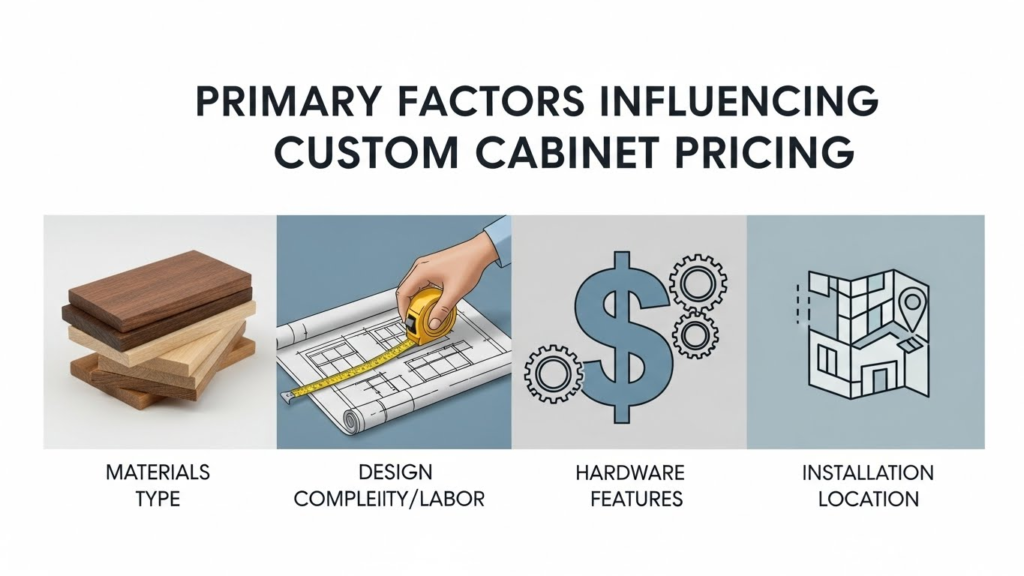
When you receive a quote for custom work, you aren’t just paying for wood. You are paying for a complex manufacturing process. Here are the primary drivers of cost.
1. Material Selection: The Foundation of Cost
The raw materials you choose account for a huge portion of the budget.
- Wood Species: This is the biggest variable. Domestic woods like Oak, Maple, and Hickory are generally more affordable custom options. Premium hardwoods like Cherry, Walnut, and Mahogany command higher prices due to scarcity and the difficulty of sourcing high-grade lumber. Exotic imports like Teak or Ebony sit at the top of the price ladder.
- Plywood vs. Particle Board: High-quality custom cabinets typically use furniture-grade plywood for the cabinet boxes. This material is strong, water-resistant, and holds screws well. Cheaper alternatives use particle board or MDF (Medium Density Fiberboard), which lowers the cost but reduces longevity.
- Eco-Friendly Options: Sustainable materials, such as bamboo or reclaimed wood, often come with a premium price tag due to processing and sourcing requirements.
2. Cabinet Construction Quality
How the cabinets are put together matters just as much as what they are made of.
- Framed vs. Frameless: Framed cabinets (traditional American style) have a face frame attached to the front of the cabinet box. Frameless (European style) cabinets offer more interior space and a sleek look but require thicker box materials for stability, which can slightly increase material costs.
- Joint Construction: Look for dovetail joints in drawers. This interlocking wood joint is the hallmark of quality craftsmanship. Dowel or biscuit joints are cheaper to produce but less durable over decades of use.
- Drawer Slides and Hinges: Hardware is not the place to skimp. Soft-close, full-extension undermount slides are standard in custom work. Brands like Blum or Salice are industry leaders. While they add to the cost of custom cabinetry, they prevent slamming and ensure drawers can hold heavy pots and pans without sagging.
3. Door Styles and Complexity
The face of your cabinets—the doors and drawer fronts—dictates the aesthetic and the labor hours required.
- Flat Panel (Slab): These are the most affordable custom cabinets to produce. They are simple, modern, and require less machining.
- Shaker Style: A timeless classic that sits in the mid-range price point. It involves a five-piece construction but lacks intricate molding.
- Raised Panel: Traditional and elegant, raised panel doors require significant routing and shaping of the wood. The labor intensity here drives up the custom cabinet pricing substantially.
- Inset vs. Overlay: Inset cabinetry, where the door sits flush inside the frame, requires extreme precision during installation. The gaps must be perfect. This precision labor makes inset cabinets 15-20% more expensive than overlay styles.
4. Finishes and Paints
The final coating is what protects your investment.
- Stain vs. Paint: Surprisingly, painted cabinets can often cost more than stained ones. A high-quality paint finish requires multiple coats of primer and paint, with sanding between each layer to achieve a glass-like surface. Staining is generally less labor-intensive, though glazing or distressing techniques will add costs.
- High-Gloss or Matte: Specialty finishes, such as high-gloss lacquer, require a dust-free environment and skilled application, increasing the price.
- Conversion Varnish: Professional custom shops use conversion varnish rather than standard polyurethane. It is incredibly durable and chemical resistant but requires specialized spray equipment and safety protocols.
Labor: The Invisible Cost Driver

When evaluating custom kitchen cabinets cost, roughly 50% to 60% of your budget pays for skilled labor. This isn’t assembly-line work; it is craftsmanship.
Design and Engineering
Before a saw touches wood, hours go into design. A professional cabinet maker will visit your home, take laser-precise measurements, and produce CAD (Computer-Aided Design) drawings. This ensures that the cabinets account for uneven floors, wonky walls, and specific appliance clearances.
Fabrication
Building custom cabinets is time-consuming. It involves:
- Milling rough lumber to size.
- Machining joinery.
- Assembling boxes and face frames.
- Sanding surfaces to prepare for finishing.
- Applying finishes in a spray booth.
Installation Costs
Never underestimate the cost of installation. Installing custom cabinetry is a precision trade. A typical installation for a medium-sized kitchen might take 3 to 5 days and cost between $2,500 and $6,000. If you have complex molding, integrated lighting, or uneven structural elements in your home, this cost will rise.
Specialized Custom Features That Add Value and Cost

The beauty of going custom is the ability to solve specific storage problems. However, every specialized mechanism adds to the bill.
Internal Organizers
- Pull-out spice racks: $200 – $500
- Lazy Susans (corner solutions): $300 – $800
- Trash and recycling pull-outs: $250 – $450
- Appliance lifts (for heavy mixers): $300 – $600
Integrated Lighting
LED strip lighting inside cabinets or under-cabinet task lighting requires routing channels into the wood and managing electrical wiring. This seamless integration is a hallmark of high-end design but adds both material and labor costs.
Decorative Elements
- Crown Molding: Detailed molding connecting the cabinets to the ceiling makes the joinery look seamless.
- Corbels and Legs: Decorative supports for islands or overhangs add architectural interest.
- Glass Fronts: Adding glass inserts to cabinet doors involves the cost of the glass itself plus the labor to secure it.
Custom vs. Semi-Custom vs. Stock: A Price Comparison
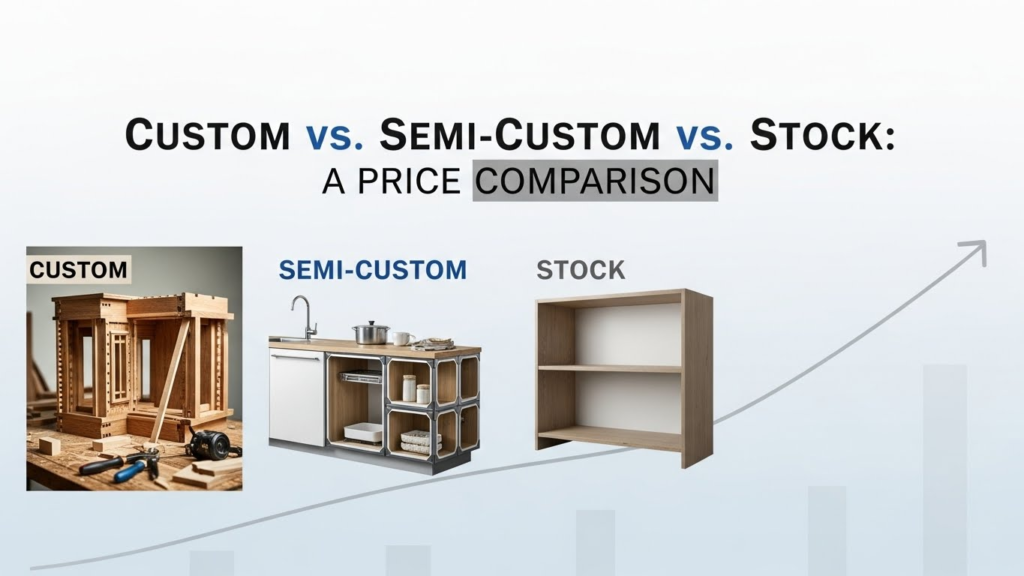
To truly understand the value proposition, it helps to compare the options side-by-side.
Stock Cabinets (Big Box Store)
- Cost: $100 – $300 per linear foot.
- Pros: Cheapest option, immediate availability.
- Cons: Limited sizes (usually in 3-inch increments), lower quality materials (particle board), limited finish options.
Semi-Custom Cabinets
- Cost: $200 – $550 per linear foot.
- Pros: Better quality than stock, ability to modify depths and widths slightly, wide range of finishes.
- Cons: Still limited by the manufacturer’s catalog; you can’t invent a new door style or wood species.
Custom Cabinets
- Cost: $500 – $1,500+ per linear foot.
- Pros: Exact fit for any space (no filler strips), limitless design choices, superior materials, lifetime durability.
- Cons: Highest cost, long lead times (8-16 weeks).
The Hidden ROI of Custom Cabinetry
While the initial check you write is large, custom cabinets offer a Return on Investment (ROI) that goes beyond aesthetics.
1. Maximized Space Utilization
Stock cabinets leave gaps. If you have a 28-inch space and stock cabinets only come in 24 or 30 inches, you are forced to use a 24-inch cabinet and a 4-inch “filler” strip. That is 4 inches of dead space. In a small kitchen, custom cabinets reclaim every inch of storage, which is incredibly valuable.
2. Longevity
A cheap kitchen renovation might last 10-15 years before drawers start sagging and finishes peel. A custom kitchen built with solid hardwoods and plywood boxes can easily last 50 years or more. When you amortize the cost over the lifespan of the product, custom cabinetry often becomes the more economical choice.
3. Resale Value
Homebuyers can spot quality. “Custom chef’s kitchen” is a powerful listing phrase. High-end cabinetry signals to buyers that the home has been well-maintained and renovated with care, potentially increasing the final sale price.
How to Get Affordable Custom Cabinets

If the price range of $15,000 to $45,000 scares you, don’t panic. There are strategic ways to lower the cost of custom cabinetry without sacrificing the custom look entirely.
1. Simplify the Door Style
As mentioned earlier, raised panel doors are labor-intensive. Switching to a Shaker style or a flat slab door can reduce the overall project cost by 10-15%. Modern design trends favor these cleaner lines anyway, so you aren’t sacrificing style for savings.
2. Choose Domestic Wood Species
Stick to Maple, Oak, or Poplar. These woods are abundant in North America and much cheaper than Walnut or Cherry. If you plan to paint the cabinets, choose Poplar or paint-grade Maple. There is no reason to pay for premium grain patterns if you are going to cover them with opaque paint.
3. Mix Custom and Semi-Custom
You don’t need custom cabinets everywhere. Consider using semi-custom boxes for the standard runs of cabinetry and saving the custom budget for the kitchen island or a specific feature wall that requires unique dimensions. A good installer can often make semi-custom units look fully custom with the right trim work.
4. Limit the specialized organizers
While a pull-out spice rack is nice, it costs significantly more than a standard drawer. Stick to standard shelving and drawers for the majority of the kitchen and buy aftermarket organizers later. It is much cheaper to buy a bamboo utensil divider from a home goods store than to have one custom-built into the drawer.
5. Handle Your Own Demolition
Cabinet makers charge for labor. If they have to tear out your old kitchen, that’s billable hours. If you are handy, removing the old cabinets yourself can save you $500 to $1,000. Just be careful not to damage the drywall or plumbing.
6. Get Multiple Quotes
Custom cabinet pricing is not regulated. Shop rates vary based on location, overhead, and current demand. Get quotes from at least three different local cabinet makers. Be sure to compare “apples to apples”—ensure they are quoting the same wood species, finish quality, and hardware.
Regional Price Variations

It is important to note that geography plays a massive role in pricing.
- Coastal Cities (NY, SF, LA): Expect to pay the highest premiums due to high labor costs and overhead.
- Midwest and South: Prices are generally lower. You might find high-quality custom work for $400-$800 per linear foot in areas with a lower cost of living.
- Rural Areas: If you are near lumber sources, material costs might be lower, but the lack of competition among skilled craftsmen can sometimes keep prices steady.
The Process: What to Expect When Ordering
Understanding the timeline helps manage expectations and budgets.
- Initial Consultation: You discuss your vision, budget, and rough measurements.
- Preliminary Estimate: The cabinet maker gives a ballpark figure.
- Design Phase: A deposit is usually required (10-50%). Detailed drawings are created.
- Final Measurements: The maker visits the site to measure down to the 1/16th of an inch.
- Fabrication: The long wait. This takes 6 to 16 weeks depending on the shop’s workload.
- Delivery and Acclimatization: Cabinets are delivered. They may need to sit in your home for a few days to adjust to the humidity levels before installation.
- Installation: The transformation happens over several days.
Red Flags to Watch For
When shopping for affordable custom cabinets, be wary of quotes that seem too good to be true. Here are signs of low-quality “custom” work:
- Stapled Drawers: High-quality drawers should be dovetailed or doweled. Staples are a sign of cheap mass production.
- Thin Back Panels: The back of the cabinet should be solid enough to square the box and screw into the wall studs. Flimsy 1/8″ hardboard is a bad sign.
- Low-Quality Hardware: If the quote doesn’t specify the brand of hinges and slides, ask. Unbranded hardware is often the first thing to fail.
- No Warranty: A reputable custom cabinet maker stands behind their work. Look for a warranty on both the finish and the craftsmanship.
Case Study: Small Kitchen vs. Large Kitchen Costs
To make this tangible, let’s look at two hypothetical scenarios.
Scenario A: The Small Urban Galley Kitchen (15 Linear Feet)
- Material: Paint-grade Maple (Shaker Style).
- Finish: White conversion varnish.
- Features: One trash pull-out, standard drawers.
- Estimated Cost: $9,000 – $14,000.
Scenario B: The Large Suburban Kitchen with Island (40 Linear Feet)
- Material: White Oak (Flat Panel).
- Finish: Natural matte stain.
- Features: Large island with seating overhang, pantry wall, spice pull-outs, glass display upper cabinets.
- Estimated Cost: $35,000 – $65,000.
As you can see, the scale of the project acts as a multiplier for every decision you make regarding materials and finishes.
Maintenance Costs
The cost of ownership doesn’t end at installation. Custom cabinets require care.
- Humidity Control: Wood expands and contracts. Maintaining a consistent humidity level in your home prevents warping and cracking paint at the joints.
- Cleaning: Use mild soap and water. Avoid harsh chemicals that can strip the finish.
- Touch-ups: Accidents happen. Ask your cabinet maker for a small “touch-up kit” including a wax stick and a small jar of the stain or paint used.
Conclusion
The cost of custom cabinets is undeniably significant, representing a major portion of any renovation budget. However, the benefits—precision fit, personalized design, and enduring quality—offer value that stock alternatives simply cannot match. By understanding the levers of cost, such as wood species, door styles, and finishes, you can navigate the market effectively.
Whether you are looking for ultra-luxury millwork or affordable custom cabinets that simply fit your space better than stock, the key is transparent communication with your cabinet maker. Define your budget early, prioritize the features that matter most to you, and view the expense not just as a purchase, but as an investment in your home’s functionality and future value.
Ready to transform your kitchen? Start by sketching your ideas and reaching out to local professionals for quotes today. The kitchen of your dreams is built one measurement at a time.