Condo vs Apartment: Key Differences You Need to Know
When searching for a new place to live, you’ll often see listings for both condos and apartments. On the surface, they can look identical. Both are self-contained units within a larger residential building or community. This similarity often leads to confusion, but the reality is that they represent two very different approaches to housing. Understanding the distinction between a condo and an apartment is crucial for making an informed decision that aligns with your financial goals and lifestyle preferences.
This guide will break down everything you need to know about the condo vs apartment debate. We’ll explore the fundamental differences in ownership, the day-to-day realities of maintenance and rules, the variation in amenities, and the long-term financial implications. Whether you’re considering your first rental, looking into homeownership, or thinking about a real estate investment, this detailed comparison will provide the clarity you need.
What is an Apartment?
An apartment is a residential unit located within a building or complex owned by a single entity, typically a corporation or property management company. When you live in an apartment, you are a tenant renting the space from this owner. All the units in the building, along with the common areas and amenities, are owned and managed by the same company.
Apartment living is defined by the landlord-tenant relationship. Your rights and responsibilities are outlined in a lease agreement, which is a legally binding contract for a specific term, usually one year. This structure offers a predictable and often simpler living situation, as the property management company handles all maintenance, repairs, and administration for the entire community.
What is a Condo?
A condominium, or “condo,” is a private residence within a larger building or community of other individually owned units. When you buy a condo, you are purchasing the specific unit itself, making you a homeowner. In addition to owning your private space, you also share ownership of the common areas with all the other condo owners in the community. These common elements can include hallways, elevators, fitness centers, pools, and outdoor grounds.
This shared ownership is managed by a Homeowners Association (HOA), which is comprised of the condo owners themselves. The HOA is responsible for maintaining the common areas, setting community rules (often called covenants, conditions, and restrictions or CC&Rs), and collecting monthly fees from each owner to cover these operational costs. While many condos are owner-occupied, it’s also common for owners to rent their units out, creating a situation where you might rent a condo directly from an individual homeowner rather than a large property management company.
Condo vs Apartment: A Detailed Comparison
While both offer a similar style of living in a multi-unit dwelling, the differences in ownership, costs, and governance create distinct experiences. Let’s dive into a side-by-side comparison of the key factors that set them apart.
Ownership and Equity
This is the most significant difference between a condo and an apartment. It is the foundation from which all other distinctions arise.
Apartment: The Renter’s Path
When you live in an apartment, you are a tenant. You sign a lease to occupy the space for a set period, but you never gain any ownership stake. Your monthly rent payments go to the landlord or property management company, covering their mortgage, property taxes, insurance, and profit. At the end of your lease, you have no equity to show for your payments. The primary benefit here is flexibility. Renting an apartment makes it easier to relocate for a job or other life changes without the complex process of selling a property.
Condo: The Homeowner’s Journey
Buying a condo means you are engaging in homeownership. You secure a mortgage, and your monthly payments go toward paying down your loan, building equity over time. You own a real asset that can appreciate in value, becoming a part of your net worth. This makes a condo a potential real estate investment. Should you decide to move, you can sell the property, hopefully for a profit. This path provides stability and the financial benefits associated with owning property.
Maintenance and Repairs
How you handle a leaky faucet or a broken appliance differs greatly between these two housing types.
Apartment Maintenance
In an apartment complex, maintenance is streamlined and straightforward. The property management company is responsible for all repairs and upkeep, both inside your unit and in the common areas. If your dishwasher stops working or a pipe bursts, you simply submit a maintenance request, and the landlord’s team handles the repair at no direct cost to you. This convenience is a major draw for apartment living, as it removes the financial and logistical burden of unexpected repairs.
Condo Maintenance
As a condo owner, you are responsible for everything inside your own unit. This includes all appliances, plumbing, electrical systems, and interior finishes. If something breaks, it’s up to you to hire and pay for a contractor to fix it. This gives you more control over the quality of repairs and upgrades but also means you bear the full financial responsibility.
For the building’s exterior and common areas, the HOA takes charge. Your monthly HOA fees are pooled to cover the maintenance of the roof, landscaping, hallways, and shared amenities. However, if a major repair is needed that exceeds the HOA’s reserve funds (like replacing the entire roof), the association may issue a “special assessment,” requiring every owner to pay an additional lump sum.
Costs and Fees
The financial structure of renting an apartment versus owning a condo involves different types of expenses.
The Costs of Apartment Living
Renting an apartment involves predictable monthly costs. Your primary expense is rent, which is a fixed amount for the duration of your lease. You will also typically pay for utilities like electricity, gas, and internet. Some complexes may charge additional fees for amenities, parking, or pets. The initial costs include a security deposit and the first month’s rent. Overall, the financial commitment is lower upfront and more predictable on a monthly basis compared to owning a condo.
The Costs of Condo Ownership
Owning a condo comes with a broader range of expenses.
- Mortgage: Your largest monthly payment will be your mortgage, which includes principal and interest.
- Property Taxes: As a homeowner, you are required to pay annual property taxes to the local government.
- Homeowners Insurance: You’ll need an HO-6 insurance policy, which covers your personal belongings and the interior of your unit.
- HOA Fees: These are mandatory monthly fees paid to the Homeowners Association to cover the maintenance of common areas, community amenities, and the building’s master insurance policy. These fees can range from a few hundred to over a thousand dollars per month depending on the community and its amenities.
- Utilities: You are responsible for all utilities within your unit.
- Maintenance & Repairs: You must budget for the cost of repairing or replacing anything inside your unit.
The upfront costs are also significantly higher, requiring a down payment (typically 3-20% of the purchase price), closing costs, and inspection fees.
Amenities and Customization
The quality and type of amenities, as well as your ability to personalize your space, can vary significantly.
Apartment Amenities
Modern apartment complexes often compete to attract tenants by offering a wide array of high-quality amenities. It’s common to find resort-style pools, state-of-the-art fitness centers, dog parks, co-working spaces, and organized resident events. These amenities are included as part of your rent and are professionally managed. However, because you are renting, your ability to customize your unit is limited. You typically cannot make major changes like painting walls, upgrading fixtures, or replacing flooring without permission, and any changes may need to be reversed before you move out.
Condo Amenities and Customization
Condo communities also offer amenities, but their quality and scope can vary more widely. Some luxury buildings may rival top-tier apartments, while older or more modest communities might have more basic offerings. The cost of these amenities is directly funded by your HOA fees.
The major advantage of owning a condo is the freedom to customize. Since you own the interior of your unit, you can renovate it to your liking. You can remodel the kitchen, install hardwood floors, or paint the walls any color you choose. This level of personalization is a key component of what makes a house feel like a home and is a major draw for those choosing condo ownership over apartment living.
Rules and Regulations
Every multi-unit community has rules, but who makes them and how they are enforced differs.
Apartment Rules
In an apartment complex, the rules are set by the property management company and are included in your lease agreement. These rules cover everything from pet policies and noise restrictions to guest policies and the use of common areas. The property manager enforces these rules, and violations can lead to warnings, fines, or even eviction. The rules are uniform for everyone in the building.
Condo Rules (HOA)
In a condo community, the rules are established and enforced by the Homeowners Association (HOA). These regulations, or CC&Rs, can often be more extensive and stricter than those in an apartment complex. They can govern everything from the color of your front door and the type of window coverings you can use to restrictions on renting out your unit. Because the HOA is made up of your fellow homeowners, disputes can sometimes become personal. Prospective buyers should always review the HOA’s documents and financial health before purchasing a condo, as a poorly managed HOA can lead to significant problems.
Is a Condo or an Apartment Right for You?
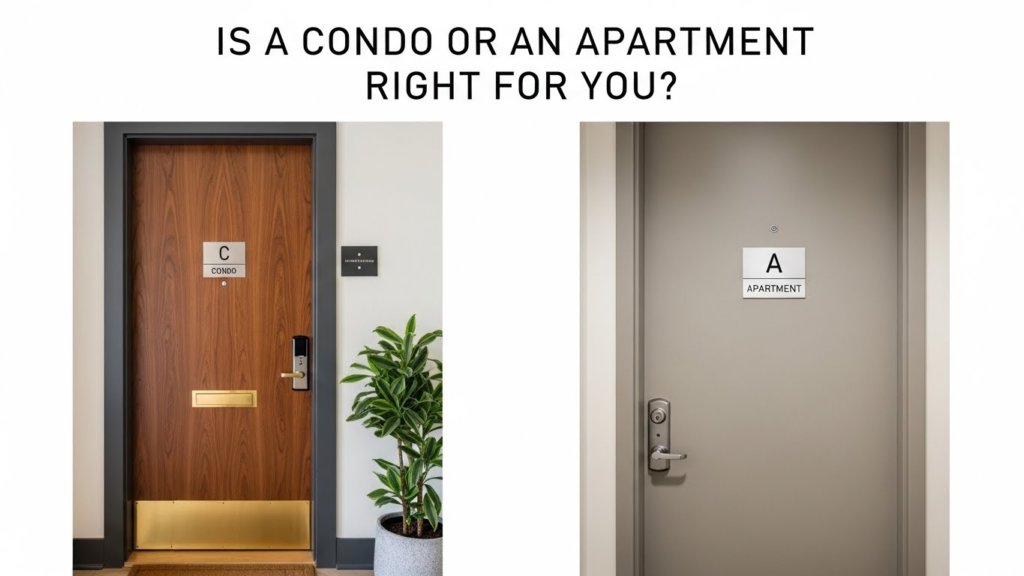
The choice between a condo and an apartment depends entirely on your personal circumstances, financial situation, and long-term goals.
Choose an Apartment If:
- You value flexibility: You may need to move for work or personal reasons and don’t want to be tied down by property ownership.
- You prefer predictable costs: You want a single monthly rent payment and don’t want to worry about unexpected repair bills.
- You want a low-maintenance lifestyle: You’d rather call a maintenance team than find and pay for a contractor yourself.
- You have limited funds for a down payment: The upfront cost of renting is significantly lower than buying.
Choose a Condo If:
- You want to build equity: You see your home as a financial asset and want to invest in your future.
- You desire stability: You plan to stay in one place for several years and want to put down roots.
- You want to customize your living space: You have a vision for your home and want the freedom to renovate and decorate as you please.
- You are ready for the responsibilities of homeownership: You are prepared to handle your own repairs and contribute to the community through HOA fees.
The Rise of Renting a Condo
It’s important to note a third option that blurs the lines: renting a condo. In this scenario, you rent a unit directly from its individual owner. This can be a different experience than renting from a large apartment company. Your landlord is a single person, which can lead to a more personal relationship but potentially less formal or slower maintenance responses. You will still have to abide by the HOA rules in addition to the terms of your lease. This can be a good way to experience condo living and a specific community before deciding to buy.
Final Thoughts on Your Housing Choice
The “condo vs apartment” decision is a major one that shapes both your lifestyle and your financial future. Apartments offer convenience, flexibility, and predictable costs, making them an excellent choice for those who are in a transitional phase of life or who prefer a hands-off approach to their living situation. Condos provide a pathway to homeownership, the opportunity to build wealth, and the freedom to create a personalized home, appealing to those seeking long-term stability and investment.
By carefully considering the differences in ownership, maintenance, costs, and rules, you can confidently determine which option is the best fit for your unique needs. Whether you choose the simplicity of apartment living or the rewarding responsibility of condo ownership, the right home is out there waiting for you.