
How Much Does a New Roof Cost in 2026?
Replacing your home’s roof is one of the most significant investments you will make as a homeowner. It’s a crucial project that protects your property from the elements, enhances curb appeal, and can even improve energy efficiency. But the first question on every homeowner’s mind is a simple one: How much does a new roof cost? The answer, however, is not so simple.
The cost of a new roof in 2026 can vary dramatically based on numerous factors. This guide will provide a comprehensive breakdown of everything that influences a new roof estimate. We will explore the primary cost drivers, from materials and labor to the size and complexity of your roof. By the end of this article, you will have a clear understanding of the average roof cost and actionable tips to help you save money on your roof replacement project.
Understanding the Average Roof Replacement Cost
Before we dive into the details, it’s helpful to have a general idea of the cost. National averages for roof replacement in 2026 typically range from $5,870 to $13,223. The national average cost is around $9,530. However, these figures are just a starting point. Your final new roof estimate could be significantly lower or much higher depending on your specific circumstances.
It’s important to remember that a new roof is not just a single purchase; it’s a combination of materials, skilled labor, and services like tear-off and disposal. Each component contributes to the final price tag. Think of it less as buying a product and more as commissioning a custom construction project for the top of your house.
To get an accurate price, you will always need to get a detailed new roof estimate from several qualified local contractors. These estimates will be tailored to your home’s unique needs and the specific materials you choose. Let’s break down the factors that contractors will consider when preparing your quote.
Key Factors That Influence New Roof Cost
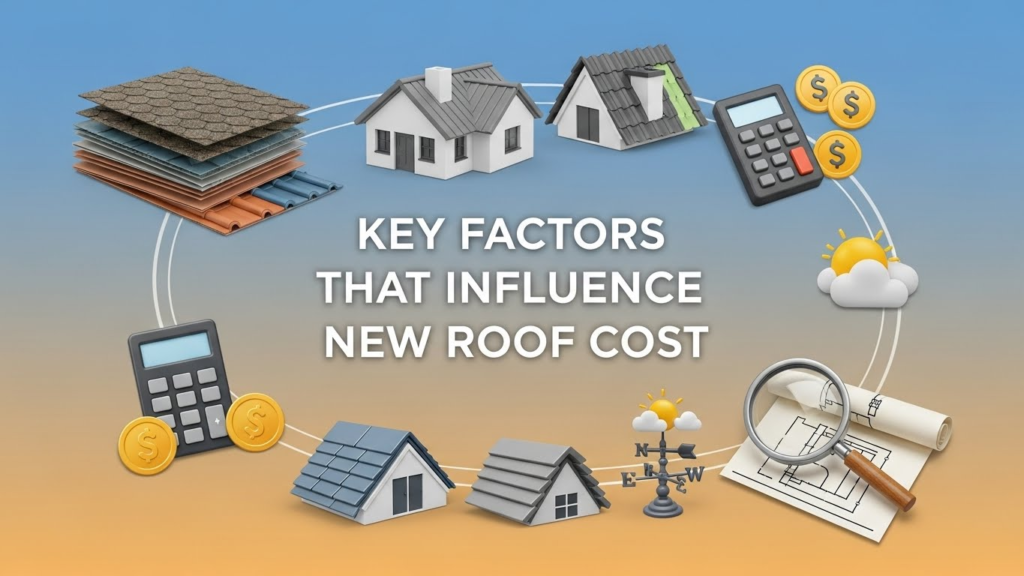
The final price of your roof replacement is determined by a variety of interconnected factors. Understanding these elements will empower you to have more informed conversations with contractors and make smarter decisions for your budget.
1. Roof Size and Pitch
The size of your roof is the most direct factor influencing cost. Roofing contractors measure roofs in “squares,” where one square equals 100 square feet. The larger your roof’s total square footage, the more materials and labor will be required, directly increasing the overall cost. A simple ranch-style home will have a smaller, less expensive roof than a large two-story colonial with a complex roofline.
The pitch, or steepness, of your roof also plays a critical role. A low-pitched roof that is easy to walk on requires less staging and safety equipment. Conversely, a very steep roof is more dangerous and time-consuming for the crew to work on. This increased risk and complexity translate to higher labor costs, as workers need specialized safety gear and may work at a slower pace.
2. Roofing Materials
The type of roofing material you choose is arguably the biggest variable in your roof replacement cost. Materials vary widely in price, lifespan, durability, and aesthetic appeal. From budget-friendly asphalt shingles to high-end slate, your choice will have a massive impact on your new roof estimate.
Asphalt Shingles
Asphalt shingles are the most popular roofing material in the United States due to their affordability and ease of installation. They come in two main types:
- 3-Tab Shingles: These are the most basic and least expensive option. They have a flat, single-layer appearance and typically last 15-20 years.
- Architectural (or Dimensional) Shingles: These are thicker, multi-layered shingles that create a more textured, dimensional look. They are more durable than 3-tab shingles, often lasting 25-30 years or more, and offer better wind resistance. While they cost more upfront, their longevity often makes them a better long-term value.
The average roof cost using asphalt shingles can range from $4 to $9 per square foot installed.
Metal Roofing
Metal roofing has grown in popularity due to its exceptional durability, longevity, and energy efficiency. Metal roofs can last 50 years or more and are highly resistant to fire, wind, and impact. They come in various styles, including standing seam panels and metal shingles that mimic the look of wood or slate.
The primary drawback is the higher initial cost. Depending on the type of metal (e.g., steel, aluminum, copper), a metal roof can cost anywhere from $9 to $20 per square foot or more.
Wood Shingles and Shakes
For a natural, rustic aesthetic, wood shingles (machine-cut for a uniform look) and shakes (hand-split for a more rugged appearance) are excellent choices. Cedar is the most common wood used. A well-maintained wood roof can last 30-40 years.
However, wood roofs require more maintenance to prevent rot, mold, and insect damage. The cost for wood shingles or shakes typically falls between $7 and $15 per square foot installed.
Slate Roofing
Slate is a premium, natural stone roofing material known for its classic beauty and incredible longevity. A slate roof can easily last over 100 years. It is fireproof, waterproof, and resists mold and pests.
This performance comes at a high price. Slate is very heavy, requiring a reinforced roof structure, and installation is a highly specialized skill. The cost for a slate roof can range from $15 to $30+ per square foot.
Clay and Concrete Tiles
Common in Spanish and Mediterranean-style homes, clay and concrete tiles are extremely durable and offer excellent fire resistance. They can last 50-100 years. Like slate, they are very heavy and require a strong roof deck to support their weight. The cost is also on the higher end, generally running from $10 to $25 per square foot installed.
3. Labor and Installation Complexity
Labor typically accounts for 40-60% of your total roof replacement cost. This cost covers the professional crew’s time, expertise, and insurance. Labor costs are influenced by several factors:
- Complexity: A simple, single-gable roof is far quicker and easier to install than a roof with multiple valleys, dormers, and skylights. Each of these features requires custom cutting, flashing, and sealing, which adds significant time and skill to the job.
- Roof Tear-Off: In most cases, the old roofing material must be removed before the new roof can be installed. This process, known as a tear-off, adds to labor costs and includes the expense of disposing of the old materials. Some jurisdictions allow for a “roof-over,” where new shingles are installed over a single existing layer, but this is often not recommended as it can hide underlying deck problems.
- Location: Labor rates vary significantly by geographic location. Urban areas with a higher cost of living will generally have higher labor costs than rural areas.
4. Roof Decking and Underlayment
Beneath your shingles lies the roof deck, which is typically made of plywood or OSB (Oriented Strand Board). During the tear-off, the contractor will inspect the decking for any water damage, rot, or soft spots. If the decking is damaged, it will need to be replaced. The cost to replace decking is an additional charge, usually priced per sheet of plywood.
Underlayment is a water-resistant barrier installed between the decking and the shingles. It’s a critical component for moisture protection. Standard felt underlayment is less expensive, while modern synthetic underlayments offer superior durability and water resistance at a higher price. Many building codes also require an ice and water shield in valleys and along eaves, which adds to the material cost.
5. Permits and Disposal Fees
Most municipalities require a building permit for a roof replacement project. The cost of this permit varies by location but is a necessary expense that your contractor will typically handle and include in the new roof estimate.
Additionally, the cost of disposing of the old roofing materials is factored into the price. This includes the cost of the dumpster and any landfill fees. These costs can fluctuate based on local regulations and the weight of the debris.
How to Get an Accurate New Roof Estimate

The best way to understand your specific roof replacement cost is to gather multiple quotes from reputable, licensed, and insured roofing contractors. A professional estimator will conduct a thorough inspection of your roof and provide a detailed written proposal.
Your estimate should clearly break down the costs for:
- Materials (specifying the type and brand)
- Labor
- Tear-off and disposal
- Permit fees
- Cost for potential decking replacement (usually per sheet)
- Warranty information (for both materials and workmanship)
Never accept a verbal quote or one that seems too good to be true. A lowball offer may indicate that the contractor is cutting corners, using subpar materials, or is not properly insured.
Tips to Save Money on Your Roof Replacement
While a new roof is a major expense, there are several ways to manage the cost without sacrificing quality.
- Choose Materials Wisely: Architectural asphalt shingles often provide the best balance of cost, durability, and aesthetics for most homeowners. While not the cheapest option upfront, their longer lifespan can save you money in the long run compared to basic 3-tab shingles.
- Schedule During the Off-Season: Roofing is a seasonal business. Contractors are busiest in the late summer and fall after storm season and before winter. If you can schedule your replacement for late winter or early spring, you may be able to negotiate a better price as contractors are looking to fill their schedules.
- Do a Partial Replacement if Possible: If damage is confined to one specific area and the rest of your roof is in good condition, you may be able to do a partial repair instead of a full replacement. However, this is often a short-term solution, and it can be difficult to match the color of older shingles.
- Get Multiple Quotes: This is the single most effective way to ensure you’re getting a fair price. We recommend getting at least three to five detailed estimates from different contractors. This allows you to compare not just the price but also the scope of work, materials offered, and the professionalism of the company.
- Ask About Financing: Many roofing companies offer financing options that allow you to pay for the project over time. This can make the upfront cost more manageable and allow you to choose a higher-quality roof that will last longer.
- Prioritize Workmanship: Don’t choose a contractor based on price alone. A poorly installed roof with high-quality materials will fail much faster than a well-installed roof with standard materials. Check reviews, ask for references, and verify licensing and insurance. The quality of the installation is just as important as the quality of the shingles.
A Worthwhile Investment in Your Home
Figuring out how much a new roof costs is a critical step in planning for this essential home improvement project. By understanding the factors that shape the final price—from the size and pitch of your roof to your choice of roofing materials—you can approach the process with confidence.
Remember that a roof replacement is more than just an expense; it’s an investment in the safety, integrity, and value of your home. Taking the time to research your options, select the right materials for your budget and climate, and hire a qualified, reputable contractor will ensure that your investment is protected for decades to come.


